In the Bassa language of central Cameroon, there is a word: Mpodol. It means "the one who carries the word of his people" — the spokesman, the voice, the one who speaks for those who cannot speak for themselves.
Ruben Um Nyobé earned that name.
I. Childhood and Education
He was born on April 10, 1913 in the village of Song Mpeck, near Boumnyébel, in the heart of Bassa country, in the Sanaga Maritime department of Cameroon. He came from a modest family.
His father, Nyobè Nsounga, was not merely a farmer — he was also a high priest of the Bassa initiation societies. His mother, Ngo Um Nonos, was a farmer. Ruben grew up in his village, first influenced by traditional education (through his father), then by Christian education.
He completed a good ten years of primary education with Protestant missionaries. This long period of study was remarkable for a farmer's son at that time.
In 1931, he passed the entrance examination for the École normale de Foulassi, near Sangmélima, in southern Cameroon. But he was expelled in 1932 for indiscipline, following a conflict with teachers from the American Presbyterian mission. This did not discourage him. He sat for the "moniteur indigène" examination as an independent candidate, passed, and began a teaching career.
"Unlike Fanon, Nkrumah, Nyerere, this man from the village did not go to Western universities. But he came from the best training places that his country offered him at the time." — Achille Mbembe
II. Early Career
In 1935, he began working as an employee in the financial administration in Douala. He continued his studies in parallel and obtained the first part of the baccalaureate in 1939.
That same year, he found a job as a court clerk in Yaoundé, then was assigned to Edéa, where he spent two years before being assigned in 1947 to the North (Maroua and Ngaoundéré).
Also in 1939, Ruben married Marthe, the woman who would share his life and remain by his side until his death.
In June 1949, placed on renewable availability, he devoted himself full-time to trade union activity.
III. Trade Unionism
Um Nyobe learned trade unionism under the guidance of two French civil servants belonging to the CGT (General Confederation of Labor): Donnat and Soulier. He worked alongside them with Charles Assalé (future prime minister of East Cameroon) and Jacques Ngom (future secretary of the Cameroonian CGT).
Initially, he was active within JEUCAFRA (French Cameroonian Youth), created in 1939, then within RACAM (Cameroonian Rally) in 1947, a movement whose purpose was "to work towards the future constitution of the Cameroonian state".
Young Cameroonians took turns going to Paris for advanced training with the French labor headquarters. Um Nyobé distinguished himself through his zeal and competence and was elected first secretary of the Cameroonian CGT.
The turning point came in 1945. In Douala, French colonists opened fire on striking workers. Protests turned into riots. Colonial authorities reported eight dead. The real number was likely much higher. A French aircraft strafed the crowds from above. Um Nyobé witnessed this massacre. It transformed him.
"Colonization is slavery; it is the enslavement of peoples by a group of individuals whose role is to exploit the wealth and people of enslaved peoples." — Ruben Um Nyobé
IV. The Birth of the UPC
In 1946, following the principles set out at the Brazzaville Conference, Cameroon could elect two deputies to the French National Assembly. They were Doctor Louis-Paul Aujoulat and Prince Alexandre Douala Manga Bell. But for the Cameroonian CGT militants, these two individuals (a white "foreigner" and a "westernized Cameroonian aristocrat") were hardly representative of the people.
As secretary general of the USCC (Union of Confederal Trade Unions of Cameroon), Um Nyobe traveled to Abidjan in 1947 for the first congress of the RDA (African Democratic Rally), an inter-territorial party in French-speaking Africa, created in 1946, whose leader was Félix Houphouët Boigny.
**On April 10, 1948, a group of trade unionists and nationalist militants gathered late into the night at the Bar Chez Sierra in the Bassa-Ndogbati neighborhood of Douala. They were:
- Léonard Bouli (Elected as the first General Secretary)
- Guillaume Bagal (Elected as the joint General Secretary)
- Emmanuel Yap (Elected as the Treasurer)
- Jacques-René Bidoum (Elected as the joint Treasurer)
- Charles Assalé
- Jacques Ngom
- Léopold Moumé Etia
- Guillaume Hondt
- Joseph Raymond Etoundi
- Georges Yémi
- Théodore Ngosso
- H-R Manga Mado
From this meeting, the Union of the Peoples of Cameroon (UPC) was born.
Um Nyobé was not present at the founding. The party was first led for a time by Léonard Bouli (sometimes written Boully). But when he stepped aside and proposed Um Nyobe's name, Um Nyobe was propelled to the head of the party. He became its secretary general — the organizer, the voice.
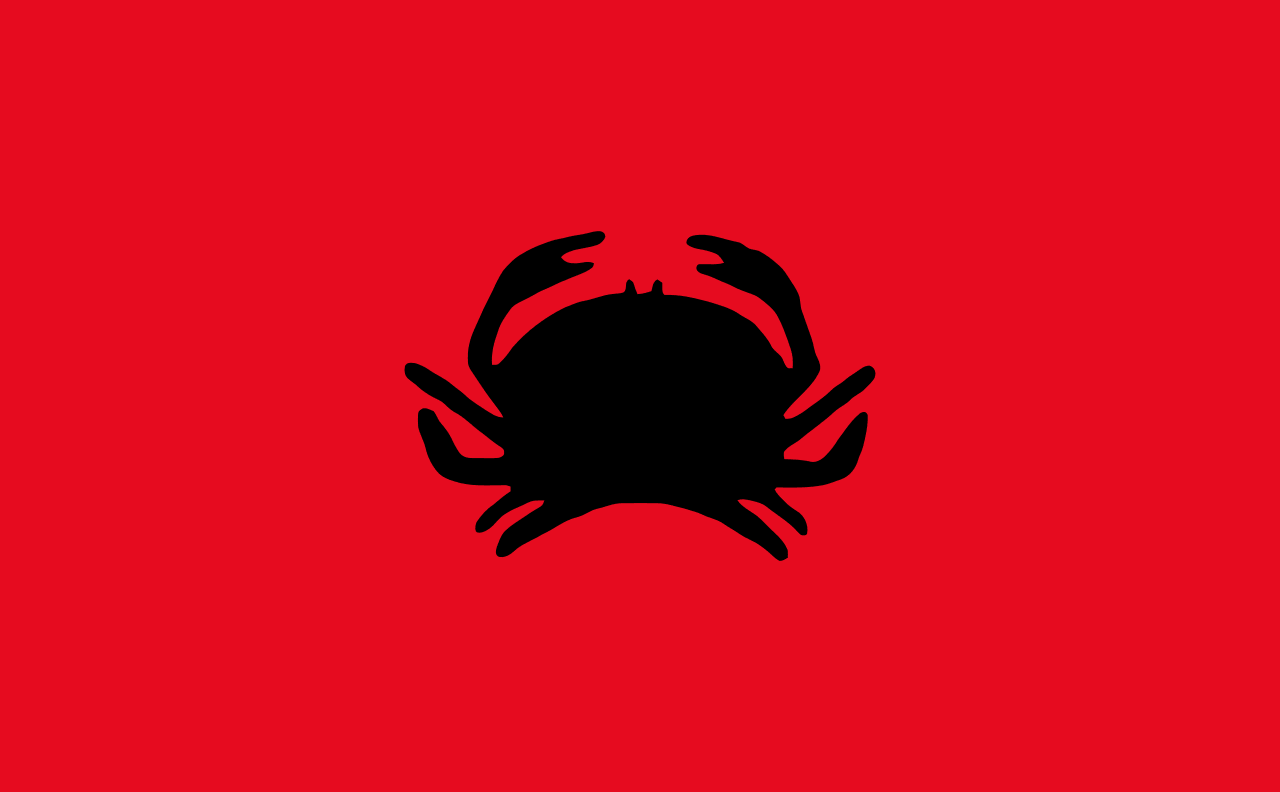
The symbols of the UPC were:
- A red flag: the blood of patriots shed for a just cause
- A black crab: the reunification demanded by the UPC of "Kamerun" (spelled with a K), divided by colonization. Black symbolizes the color of Black Africa
The UPC's platform was radical for its time:
- Immediate independence — not gradual autonomy
- Reunification of French Cameroon with British Southern Cameroons
- Social justice and an end to racial discrimination
Um Nyobé became one of the vice-presidents of the RDA in 1949.
V. Speaking at the United Nations
In 1952, Um Nyobé traveled to New York. He appeared before the United Nations Trusteeship Council to denounce French colonial administration in Cameroon.
This was unprecedented. A colonial subject, a "native," standing before the world body to name the injustices of his oppressors.
He denounced:
- Wage and job discrimination between French and Cameroonian workers
- The brutality of colonial repression
- France's failure to prepare Cameroon for self-governance
He also made the case for reunification — the demand that would define his legacy.
The 1952 trip was financed by public subscription. The UPC's popularity was such that Cameroonians contributed to send their spokesman to New York.
Paris Match wrote at the time:
"Um Nyobè, leader of the Union populiste of Cameroon, is expected in New York where the Trusteeship Commission, presided over by his brother of race, Ralph Bunche, will admit him to the debate on the mandate, as accuser of the mandatory powers."
Um Nyobé testified before the Fourth Committee of the United Nations in 1952, 1953, and 1954. Each time, he demanded independence and reunification.
VI. Radicalization and Prohibition
On July 13, 1955, after the May riots (20 dead, 114 wounded among the rioters), the UPC and its branches were officially banned by the French authorities.
The May insurrection was not approved by Um Nyobe, who felt it had little chance of success. He always favored peaceful solutions and disapproved of the use of violence despite the circumstances.
"Some comrades may think that the UPC leaders put the organization of the movement above the great problems of the hour. This is true. We know from experience that all political problems can be solved with good organization, while all failures and even catastrophes are possible in a poorly organized movement." — Ruben Um Nyobé, after 1955
In December 1956, the UPC created an armed branch, the CNO (National Organization Committee), and decided to move to sabotage actions. Cameroon thus became the only country in French-ruled Black Africa to resort to armed struggle to demand independence.
"Few African revolutionary movements will have had a leader of his caliber." — Georges Chaffard, Les Carnets secrets de la décolonisation
VII. Life in the Maquis
Um Nyobé went underground. He established himself in the dense forest of the Bassa country, where he continued to organize the resistance, preach independence, and maintain command posts.
In August 1957 (or 1958 according to sources), he traveled secretly to Douala, where a clandestine meeting of UPC leaders was held. They discussed the possible return of the party to legality.
During this meeting, Um Nyobe declared that it was his duty to be in the maquis until independence was proclaimed. He mistrusted French promises to grant independence eventually. As a symbol of the Cameroonian nation, he could not abandon the torch.
Yet, he said he was ready to renounce armed struggle if his comrades thought a return to legal battle was preferable.
In the maquis, he kept a personal journal where he noted his dreams, aspirations, and bad premonitions.
A French intelligence report (1947) described him thus:
"Intelligent, seeks to acquire a superior education on his own... for the past eighteen months, he has devoted all his activity to creating numerous unions united in a Regional Union, of which he is the secretary general... Dangerous element. Goes out very little, leads a withdrawn life, with a very small circle of friends."
VIII. Betrayal and Death
On Saturday, September 13, 1958, near Boumnyébel, a patrol of Sarha riflemen (Chad) commanded by an African sergeant-major discovered four men hiding in the bushes. The informant who had led them to Um Nyobé pointed him out.
Some accused Théodore Mayi Matip as the one who betrayed Um Nyobé. According to this version, Mayi Matip conveniently disappeared a few moments before Um and his companions were surprised by the patrol.
As Um Nyobe and his men tried to flee, they were shot several times.
Other versions differ: some historians assert that the patrols had received orders to shoot him, while others believe his death was an accident resulting from the circumstances of his capture.
Near Um's body, they found the satchel he was carrying. It contained UPC archives and the notebook in which "Mpodol" recorded his dreams and daily thoughts, the tasks to accomplish.
What followed was not a dignified end to a revolutionary life.
Witnesses reported that the French troops dragged his body through the mud. They displayed his corpse publicly so that all could see that the man they called "immortal" was dead. A French tract reportedly announced his death with the words: "The God who was mistaken is dead."
The bodies were brought back to the village. The villagers were invited to witness the death of Um Nyobé. He died clutching a "gris-gris" (fetish) in his hand that had not protected him from the bullets.
A delegation of the Association of Notables of Cameroon came from Douala to see the body. A religious service was celebrated at Boumnyébel by a Protestant pastor.
After burial — within the grounds of the Protestant mission at Éséka — the tomb of the independence prophet was covered with a layer of cement to prevent his closest supporters from removing his body. His corpse was embedded in a block of cement and buried without a coffin.
The man who had carried the word of his people was silenced.
But What If
What if the traitor had not spoken? What if the French patrol had missed him that night? What if Um Nyobé had survived to see independence?
If he had lived, the UPC would have been the dominant political force in Cameroon in 1960. Ahmadou Ahidjo, the French-backed candidate, would have faced a rival with genuine popular support.
France would have faced an impossible choice: negotiate with Um Nyobé and the UPC, or fight a prolonged counterinsurgency while the world watched. The Cold War meant that France could not afford to appear as an unyielding colonial power.
What would be different today?
- A different path to independence — negotiated, not imposed
- A unified Cameroon — Um Nyobé's demand for reunification might have produced a stronger, more equitable union
- No Anglophone Crisis? — The seeds of the 2016 separatist conflict were planted in 1961, when the British Southern Cameroons voted to join a federation that was never truly equal. Perhaps Um Nyobé would have negotiated different terms
- A different relationship with France — Um Nyobé, who had denounced French colonialism at the UN, would have charted a more independent course
The counterfactual is not idyllic. The UPC faced internal fractures. Building a stable government from a guerrilla movement would have been a monumental challenge. But the path Cameroon actually took — thirty years of Ahidjo's one-party state, followed by Biya's four-decade rule — was not the only path.
We will never know.
The traitor spoke. The guns fired. And on September 13, 1958, at the age of forty-five, Ruben Um Nyobé was silenced forever.
IX. Legacy and Rehabilitation
Um Nyobé's assassination did not end the UPC's struggle. But it decapitated the movement. His successors — Félix-Roland Moumié, Ernest Ouandié, Osende Afana — were also assassinated or executed by the French and their Cameroonian allies. The party fractured into factions.
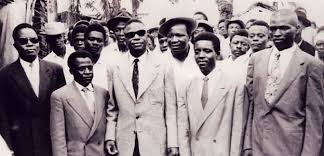
For nearly forty years, speaking Ruben Um Nyobé's name was illegal in Cameroon. His image could not be displayed. His writings could not be read. Public references to the UPC were banned.
In 1990, following the wave of democratization across Africa, the Cameroonian government passed Law No. 91/022, which officially "rehabilitated" Um Nyobé and other nationalist martyrs. The law declared that they had "worked for the birth of national sentiment, independence, or the construction of the country, the radiance of its history or its culture."
In plain English: After thirty-two years of silence, the government admitted that Um Nyobé was not a terrorist. He was a patriot.
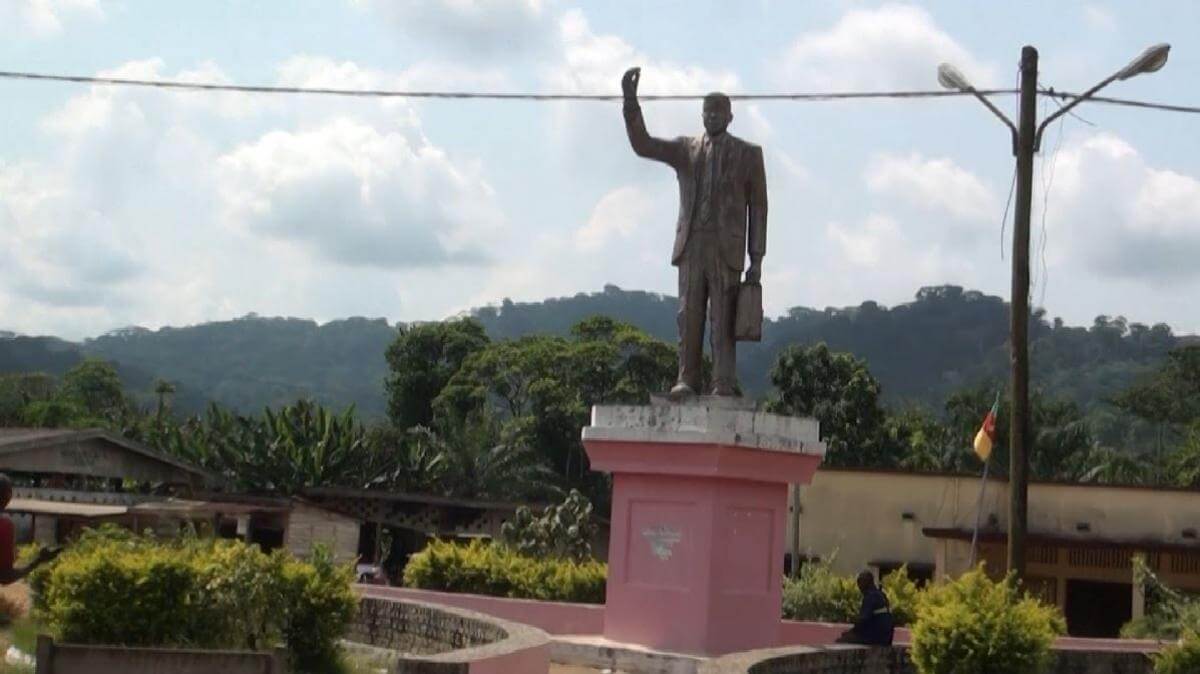
In 2007, a monument was erected in his honor at Éséka, over the cement-covered tomb.
In 2018, Cameroonian musician Blick Bassy released an album titled 1958 — a tribute to the fallen leader.
X. Bibliography
- "Je me souviens de Ruben" — Stéphane Previtali, Karthala editions
- "La naissance du maquis dans le sud Cameroun" — Achille Mbembe, Karthala editions
- "Écrits sous maquis" — Achille Mbembe, L'Harmattan editions
- "Les Carnets secrets de la décolonisation", Volume II — Georges Chaffard, Calmann-Levy editions
- "Le Cameroun du Mandat à l'indépendance" — Victor T. Levine, Présence Africaine editions
- "André-Marie Mbida, premier Premier ministre du Cameroun" — Daniel Abwa, L'Harmattan, 1993
- "Le problème national kamerunais" — Achille Mbembe, Karthala editions
Life Journey
Key Facts
Three Intriguing Questions
Published April 21, 2026 — 68 years after the assassination