Ahmadou Babatoura Ahidjo, the man who would become Cameroon's first president was born under a cloud of ambiguity that would follow him throughout his life. The circumstances of his birth, the identity of his father, and even his birth date remain subjects of controversy.
I. Birth and Early Years
Ahmadou Ahidjo was born in Garoua, the capital of northern Cameroon, most likely in August 1924 — though some sources place his birth in 1922. The uncertainty itself tells a story: in the colonial north, births were not always meticulously recorded, and Ahidjo's family had reasons to be circumspect.
He came into the world as the only son of Asta Gabdo (1908-1983), a Fulani woman from Garoua who would later be known as Adda Kano — a nickname she earned after winning a beauty contest in Kano, Nigeria. His mother's identity is undisputed. His father's is not.
II. The Father Controversy
The identity of Ahidjo's biological father has never been officially confirmed. Multiple accounts exist, none definitively proven:
Version One (Official Biography): His father was a Fulani village chief or notable from the Garoua region who died when Ahidjo was young. This version was promoted by the post-independence state to establish Ahidjo's Fulani aristocratic credentials — essential for legitimacy in the Muslim north.
Version Two (Hausa Merchant): Historical records identify his father as Ibrahim Baba Kasuwa, a prominent Hausa merchant and local chieftaincy notable. This theory suggests Ahidjo had non-Fulani origins that were strategically obscured.
Version Three (Malian Heritage): Local northern oral history and alternative researchers suggest his biological father was a trader named Ibrahim Abokum (or Hamadoun Ahmadou Cissé), who originated from Mali and died before Ahidjo could reconnect with him.
Version Four (Lebanese Merchant): According to biographer Philippe Gaillard, Asta Gabdo was proposed as a wife to Ibrahima Baban Kassoua, a Lebanese merchant who had just lost his wife. Four to five months after the marriage, the fourteen-year-old Asta became pregnant. When the child was born prematurely — and was visibly Black — Kassoua renounced the child. He refused to acknowledge paternity. The child was given the name Ahmadou by Badamassi (the man who arranged the marriage) and Ahidjo by his mother.
The Lamido Hayatou Connection: Some sources, including Yaya Souleymanou (interviewed September 9, 2015), claim that the true biological father was Lamido Hayatou of Garoua. According to this version, when Hayatou and his friend Badamassi proposed the young adolescent to the Lebanese merchant, she was already pregnant. To avoid losing face, the pregnancy and the child's true origins were concealed.
Ahidjo himself never publicly clarified his origins. But there is a revealing clue: in his unrealized project of writing a memoir, he planned to dedicate the first two major chapters to Charles de Gaulle and Lamido Hayatou. That dedication never materialized — the book was never written.
In plain English: Ahidjo's non-Muslim indigenous ancestry (some suggest Moussey or other non-Fulani origins) was deliberately hidden for political reasons. In the conservative Muslim north, a child born out of wedlock to a "free woman" (not under male authority) with ambiguous ethnic origins would have faced insurmountable obstacles to power.
Whatever the truth, the ambiguity served Ahidjo well. It allowed him to be all things to all constituencies — Fulani enough for the north, Muslim enough for the Islamic elite, modern enough for the French-educated southerners.
III. Asta Gabdo — The Mother Who Forged a President
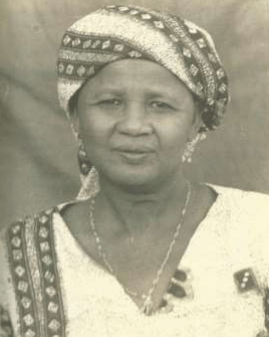
Asta Gabdo (1908-1983) was the single most important figure in Ahidjo's early life. Her story is remarkable.
Born into a Fulani family in Garoua, she experienced a childhood marked by instability. Her mother, Mairama Dia, was married multiple times — a pattern Asta would repeat. Raised in a matrilineal household without consistent paternal authority, Asta developed an independent spirit uncommon for women of her time and place.
At approximately fourteen years old, she was married to Ibrahima Baban Kassoua. The marriage lasted only months. After the birth — and renunciation — of her son, Asta refused to be a burden.
The Kano Beauty Contest: In 1924, she traveled to Kano, Nigeria, where her older sister Hadja Haoua lived. There, she entered and won a beauty contest, earning the nickname "Adda Kano" — "the lady of Kano." The name stuck for life.
The Schooling Decision: When she learned that her son had been forcibly enrolled in French colonial school by Badamassi (her host in Garoua), she rushed back to remove him. But she was persuaded to let him stay. The persuasion came from Lamido Hayatou himself, who explained the importance of Western education in the new colonial order.
This decision would change Cameroon's history.
Asta became one of the few women of her generation in northern Cameroon to understand the utility of Western education, reconciling Islamic religion with modern science in a context of deep community resistance. When Ahidjo was reluctant to study, she used a whip to compel him. She was determined.
"She has been one of the few women of her generation in North Cameroon to have understood the usefulness of school in reconciling Islamic religion and science in a context of reluctance to this new institution." — Mathias Kaïmangui, "Asta Gabdo, Genitrice d'Ahmadou Ahidjo"
The Political Architect in the Shadows: Once Ahidjo entered politics, Asta became his "eyes and ears" in the north. She was consulted on administrative appointments. She influenced the selection of traditional rulers (lamibe). She received officials and petitioners, who treated her with the deference due a queen mother.
A French intelligence report from 1947, when Ahidjo was still relatively unknown, described him as:
"Intelligent, ambitious, seeks to acquire a superior education on his own... Dangerous element. Goes out very little, leads a withdrawn life, with a very small circle of friends."
The report did not mention his mother. But those who knew understood: behind the withdrawn young man stood a formidable woman.
Education and Early Career
IV. Schooling (1930s)
Ahidjo's educational path was unconventional for a northern Muslim boy of his era.
Quranic School: Like most children in Garoua, he first learned to read the Quran. This grounding in Islamic scholarship gave him cultural legitimacy in the north.
French Colonial School: Against community resistance, his mother (acting on Lamido Hayatou's advice) insisted he attend the French school. This was a deliberate strategy — one that would make him one of the few northerners qualified for the colonial civil service.
École Supérieure de Yaoundé (1938-1941): After passing his examinations, he was admitted to the prestigious Superior School in the capital, where he trained as a radio-telegraph operator. He graduated in 1941 alongside Amadou Mahondé (future Cameroonian politician).
V. Radio Operator to Politician (1941-1947)
From 1941 to 1946, Ahidjo worked as a radio-telegraph operator for the colonial postal service. The job was strategically invaluable: it gave him access to state communications, political networks, and the inner workings of colonial administration.
In 1946, French reforms following the Brazzaville Conference (1944) expanded African political representation. Cameroonians could now elect deputies to the French National Assembly and seats in a new Territorial Assembly.
1947: Ahidjo won election to the Cameroon Territorial Assembly (ATCAM) — his formal entry into politics at age twenty-three.
1953-1956: He represented Cameroon in Paris at the Assembly of the French Union, the colonial-era body where France's overseas territories were nominally represented. This role built his reputation with French authorities as a reliable, moderate alternative to the radical nationalists of the UPC.
1957: He served briefly as President of the Legislative Assembly of Cameroon — a critical stepping stone.
Premiership and the French Alliance (1957-1960)
VI. The Ascent
February 1957: Under André-Marie Mbida's autonomous government, Ahidjo was appointed Vice-Prime Minister and Minister of the Interior.
February 18, 1958: In a political maneuver that demonstrated his strategic acumen, Ahidjo orchestrated the isolation of Mbida and took over as Prime Minister of the autonomous Cameroonian government. The same year, he founded the Cameroonian Union (UC) — which would later become the country's single party.
VII. The Double Game: Suppressing the UPC While Demanding Independence
Ahidjo's strategy during the final years of colonial rule was both ruthless and brilliant.
Crushing the UPC: He partnered deeply with the French military to violently suppress the nationalist Union of the Populations of Cameroon (UPC) insurgency. French forces hunted Ruben Um Nyobé, Félix-Roland Moumié, and Ernest Ouandié — the very men who had first demanded independence.
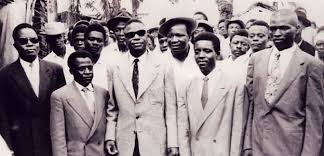
Co-opting Their Platform: While fighting the rebels, Ahidjo simultaneously adopted their core demand — total independence from France and reunification of the two Cameroons.
The calculation was clear: eliminate the radical alternative, then claim their cause as his own. France, having no other reliable partner, had no choice but to support him.
January 1, 1960: Cameroon formally declared independence. On May 5, 1960, the new National Assembly elected Ahidjo as the first President of the Republic of Cameroon.
Independence and Federal Reunification (1960-1966)
VIII. The Geopolitical Challenge
Independence came at a price. The British-administered Southern Cameroons had voted in a 1961 plebiscite to join the French Republic — not as independent states, but as a federation. Ahidjo now faced the challenge of integrating the Anglophone territory.
IX. The Foumban Conference (July 17-21, 1961)
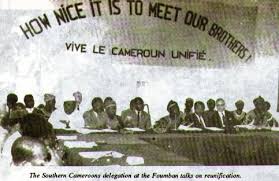
The five-day Foumban Conference was a masterclass in asymmetrical negotiation. Ahidjo entered with overwhelming leverage:
| Factor | Francophone Cameroon | Anglophone Cameroon |
|---|---|---|
| Sovereignty | Independent state since 1960 | UN trusteeship (not sovereign) |
| Military | National army | No army |
| Constitution | Existing 1960 constitution | No constitution |
| Leadership | Internationally recognized head of state | Territory representative **John Ngu Foncha** |
The Constitutional Trap: Foncha envisioned a loose, equal federation with two distinct states sharing minimal central powers. Ahidjo completely rejected this approach. Instead of drafting a new federal document together, Ahidjo presented a modified version of the existing 1960 Francophone constitution — which built an overwhelmingly powerful executive branch.
Divide and Conquer: Ahidjo exploited divisions within the Anglophone delegation, playing Foncha's ruling party against Emmanuel Endeley's opposition. The Anglophones could not present a unified bargaining front.
The Outcome: Under immense time pressure and lacking external backing, the Anglophone delegates conceded to most of Ahidjo's terms. The resulting federal system gave Ahidjo supreme control over defense, foreign policy, and the economy. The federation was, from its birth, weighted toward centralization.
X. The Federal Republic (1961-1966)
The Federal Republic of Cameroon was established with:
- A powerful federal executive (controlled by Ahidjo)
- Two state governments — West Cameroon (Anglophone) and East Cameroon (Francophone)
- Regional autonomy for the Anglophone legal and educational systems (nominally preserved)
- A federal capital in Yaoundé (Francophone territory)
On paper, it was a federation. In practice, Ahidjo's control over federal ministries, security forces, and economic planning made the federation a vehicle for eventual centralization — not genuine power-sharing.
Total Consolidation and the Unitary State (1966-1982)
XI. The One-Party State (1966)
By the mid-1960s, Ahidjo had eliminated his rivals. The UPC was crushed; its leaders dead or in exile. Anglophone political forces were absorbed into the ruling coalition.
1966: Ahidjo dissolved all existing political parties to forge the Cameroon National Union (UNC). Opposition parties were outlawed. Cameroon became a de facto one-party dictatorship.
In plain English: Ahidjo had centralized power so completely that there was no legal way to oppose him.
XII. The 1972 Referendum
On May 20, 1972, Ahidjo posed a single question to the nation:
"Do you approve, with the aim of consolidating national unity and accelerating the economic, social and cultural development of the nation, the draft constitution submitted to the Cameroonian people by the President of the Federal Republic of Cameroon and establishing a Republic, united and indivisible, under the name of the United Republic of Cameroon?"
The official results:
| Measure | Number | Percentage |
|---|---|---|
| YES | 3,177,846 | 99.99% |
| NO | 176 | 0.01% |
| Turnout | 3,179,634 | 98.25% |
The outcome: The federal framework was dismantled. Cameroon became a centralized "United Republic" — the two stars on the national flag merged into one. The Anglophone region lost its distinct federal institutional powers.
May 20 would become Cameroon's National Day — a celebration of centralization.
In plain English: The man who had united French and British Cameroon then dismantled the very federation he had created, concentrating all power in Yaoundé.
XIII. Economic Policy: "Planned Liberalism" (Libéralisme Planifié)
Ahidjo rejected both radical state-run socialism (neighboring African regimes) and unchecked free-market capitalism. He developed a hybrid model he called "Planned Liberalism."
State-Guided Capitalism: Private ownership and foreign investments were encouraged, but they had to align strictly with five-year development plans designed and managed directly by the central government.
Agricultural Monopolization: Agriculture served as the primary economic engine. Ahidjo created powerful state-run agricultural corporations:
- SODEPRODON (rice and palm oil)
- CDC (Cameroon Development Corporation, tea and rubber)
- Marketing boards (ONCPB for coffee, cocoa, and cotton)
The state fixed crop prices, collected revenues from exports, and subsidized local farmers.
Strategic National Infrastructure: Agricultural profits were reinvested into massive nation-building projects:
- The Trans-Cameroon Railway (linking the interior to the coast)
- Camair (national airline)
- Edéa Dam and other hydroelectric projects
- Local manufacturing hubs
The Oil Cushion: When offshore oil production began in the late 1970s, Ahidjo treated petroleum revenues with strict secrecy. He kept oil money in "off-budget" accounts (comptes hors-budget) to prevent inflation. These funds served as:
- An emergency reserve
- A tool for elite political patronage
- A source of off-the-books spending
Economic Solvency: This highly disciplined, state-led model made Cameroon one of the most financially stable countries in Sub-Saharan Africa during the 1960s and 1970s. The country maintained budget surpluses and avoided the heavy debt traps that crashed neighboring economies.
However, the opaqueness of off-budget accounts would later fuel corruption scandals — and contribute to the "missing billions" of the oil years.
Family Life
XIV. Wives
Ada Garoua: His first wife. The marriage took place during his early years as a civil servant and rising politician in northern Cameroon. Little is publicly documented about her — a reflection of Ahidjo's general discretion about his private life.
Germaine Habiba Ahidjo (born 1932, died April 20, 2021): His prominent second wife and the official First Lady of Cameroon from 1960 to 1982. Born in Mokolo, she was a French-trained nurse specializing in tropical diseases. They married on August 17, 1957.
After Ahidjo's resignation and exile, Germaine remained in Senegal with her husband. She became a fierce defender of his legacy throughout their exile. She died in Dakar on April 20, 2021 — almost thirty-two years after her husband.
XV. Children
Ahidjo fathered four biological children across his two marriages:
Mohamadou Badjika Ahidjo: His eldest child and only son, born to his first wife, Ada Garoua. He later entered Cameroonian politics, serving as a member of parliament (deputy) and an itinerant ambassador. He has been critical of Paul Biya's treatment of his father's legacy.
Babette Fadimatou Ahidjo: The eldest daughter born to Germaine Ahidjo. She worked as a medical professional (dermatologist/pediatrician). She passed away in exile in Dakar on February 21, 2023.
Aissatou Ahidjo: His second daughter with Germaine. She has lived a mostly private life away from public politics.
Aminatou Ahidjo: His youngest daughter with Germaine. Unlike her mother and sisters who remained in exile, she famously returned to Cameroon, mended ties with the ruling regime, and joined President Paul Biya's political party (RDPC) in 2013 — a gesture many interpreted as reconciliation between the Ahidjo and Biya families.
Ahidjo was also stepfather to Daniel Toufick, a son Germaine had from a brief previous marriage.
In plain English: The man who centralized Cameroon maintained strict separation between his public role and private family. Some children stayed in exile, defending their father's legacy. One daughter made peace with Biya and returned to Cameroonian politics.
The Sudden Departure (1982)
XVI. The Unexpected Resignation
On November 4, 1982, Ahidjo announced on national radio that he was voluntarily resigning. He cited health complications. He was fifty-eight years old — still vigorous. The nation was stunned.
The Official Reason: "Fatigue" and a desire to dedicate himself to the party.
The Unspoken Context: Ahidjo expected to remain the real power in Cameroon. He would rule from behind the throne, controlling the party, security services, and military.
His chosen successor was Paul Biya — a quiet technocrat, a Christian from the south, a man with no independent power base. Ahidjo believed Biya would be a caretaker, a figurehead.
He was wrong.
November 6, 1982: Paul Biya was sworn in as the second president of Cameroon.
XVII. The Struggle for Succession
Within months, Biya began consolidating his own power:
- He demanded the party apparatus report to him, not Ahidjo
- He replaced Ahidjo's loyalists with his own allies
- He signaled he intended to be president in fact, not just in name
Ahidjo was furious. He had created a monster.
Mid-1983: The conflict became public. Ahidjo resigned as president of the UNC and went into exile in France.
July 1983: Biya announced the discovery of a plot to overthrow him. He accused Ahidjo of orchestrating it from exile. The former president was condemned to death in absentia. Biya commuted the sentence — but the message was clear: Ahidjo was no longer untouchable.
April 6, 1984: The Republican Guard, loyal to Ahidjo, attempted a coup. The presidential palace was surrounded. For two days, Yaoundé was a battlefield. Biya survived. The coup was crushed. Ahidjo's allies were purged.
XVIII. Mother's Death (February 17, 1983)
A telling footnote: Asta Gabdo died in Garoua on February 17, 1983 — just over three months after her son's resignation, less than a year before the coup attempt. Biya did not attend her funeral. The indifference signaled that the era of Ahidjo's influence was over.
Exile and Death (1982-1989)
XIX. Life in Senegal
After the 1984 coup attempt, Ahidjo lived the remainder of his life in Dakar, Senegal. He maintained his political network from exile, but his influence waned. He never returned to Cameroon.
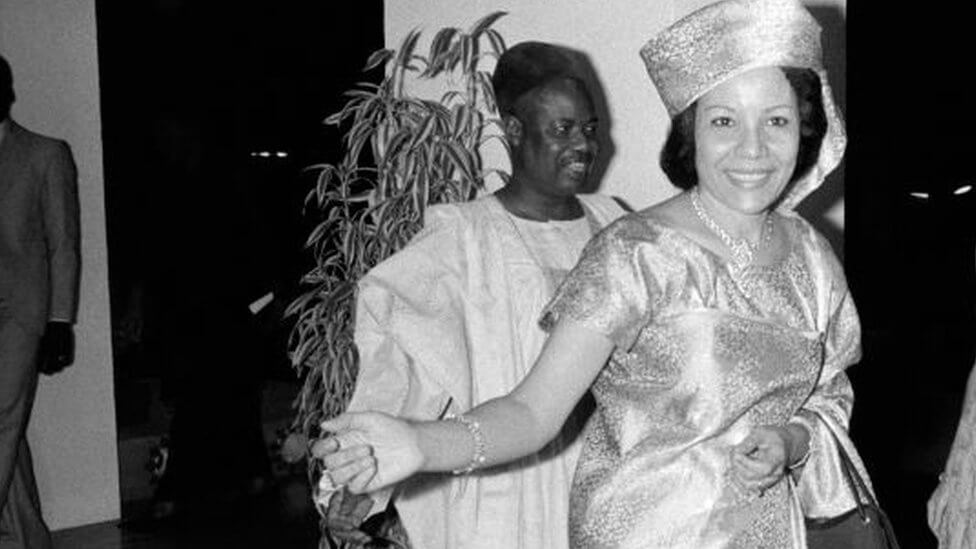
Germaine Ahidjo stayed by his side, nursing him through illness and defending his legacy.
XX. Death (November 30, 1989)
Ahmadou Ahidjo died in Dakar on November 30, 1989, at approximately 65 years of age.
He was buried in Yoff, Senegal — not in Cameroon. The government of Paul Biya did not permit his body to be returned to his homeland for burial.
His widow, Germaine, remained in Senegal until her death in 2021, continuing to defend her husband's legacy.
The Duality of Legacy (Debate)
XXI. The Debate
Historians and Cameroonian citizens remain divided on Ahidjo's legacy.
Supporters argue:
- He united a divided territory into a single nation
- He maintained absolute stability in a volatile region (Chad, Nigeria, Central African Republic)
- He built infrastructure: roads, railways, dams, schools
- He kept Cameroon economically solvent, avoiding debt traps
- He was the father of the nation
Detractors argue:
- Stability was achieved through a ruthless police state
- Opposition was crushed, dissidents tortured, leaders executed
- The UPC rebellion was suppressed violently — tens of thousands died
- The Anglophone federation was a sham, dismantled in 1972
- Economic "planned liberalism" hid corruption and off-budget accounts
- The oil money "disappeared" — unaccounted billions
But What If
The counterfactual questions surrounding Ahidjo's rule are not merely academic. They cut to the heart of Cameroon's political trajectory — and its present crises.
1. What if Ahidjo had never resigned?
If he had remained president, the 1984 coup attempt might not have occurred. The Republican Guard, loyal to Ahidjo, would have had no reason to strike. The violence of April 1984 — seventy-one dead by official count, perhaps hundreds by unofficial — would have been avoided.
But the deeper question is not about the coup. It is about the nature of power itself.
Ahidjo had ruled for twenty-two years. He was fifty-eight when he stepped down — still vigorous. If he had stayed, he would have ruled until his death in 1989 at age sixty-five. That would have meant an additional seven years of one-party rule under a northerner, a Fulani, a man who had centralized power absolutely.
Would Ahidjo have faced the winds of democratization that swept Africa in 1990? That wave arrived one year after his death. If he had lived, would he have legalized opposition parties? Or would he have clung to power, fighting the inevitable?
2. What if the 1972 referendum had failed?
If the federation had been preserved, the Anglophone Crisis of 2016 might never have occurred. The sense of marginalization by a Francophone-dominated unitary state would have had no foundation. The legal system, education, and culture of the Anglophone regions would have retained the federal protections they were promised in 1961.
Cameroon might have become a model of bilingual federalism — a rare African success story of diversity managed through institutions, not suppressed by force.
Instead, Ahidjo dismantled the federation. He concentrated power in Yaoundé. He made Cameroon "one and indivisible" — borrowing the language of the French Republic, which has no room for intermediate sovereignties.
The consequence? Fifty years later, the Anglophone regions are in open revolt. Over 900,000 people have been displaced. Thousands have died.
3. What if Ahidjo had chosen a different successor?
He had many options. He could have chosen a fellow northerner, a Fulani Muslim who would have maintained the regional balance of power. He could have chosen a military officer with a loyal following. He could have chosen a caretaker who would have accepted a purely symbolic role.
Instead, he chose Paul Biya — a quiet, southern, Christian technocrat with no independent power base. A man Ahidjo believed he could control.
He was wrong.
The student defeated the master. Biya has ruled for forty-four years — twice as long as Ahidjo himself. And he has not let go.
4. What if Ahidjo had governed differently?
What if he had preserved the federation? What if he had allowed a multi-party system? What if he had used oil revenues transparently, investing in a sovereign wealth fund like Norway, rather than hiding billions in off-budget accounts?
The counterfactual is not that Ahidjo was evil. He was a product of his time, his region, his religion, his ambiguous origins, and his burning ambition.
But the choices he made — centralization over federation, one-party rule over democracy, opacity over transparency — set Cameroon on a path that has been difficult to reverse.
The question is not whether Ahidjo unified Cameroon. He did.
The question is whether the price of that unity was too high.
Timeline of Key Events
Mother, Asta Gabdo, born
Born in Garoua (or 1922)
Attends École Supérieure de Yaoundé
Elected to Cameroon Territorial Assembly
Represents Cameroon in Paris
Vice-Prime Minister; President of Legislative Assembly
Becomes Prime Minister
Cameroon independence
Elected first President
Foumban Conference
Federal Republic established
Creates UNC; one-party state
Referendum creates unitary state
Oil production begins
Resigns as President
Mother Asta Gabdo dies
Condemned to death in absentia
Republican Guard coup attempt
Dies in Dakar, Senegal
Key Facts
Further Reading & Sources
- "Ahmadou Ahidjo: Patriote et despote, bâtisseur de l'État camerounais" — Philippe Gaillard, 1994
- "Ahmadou Ahidjo: Le destin" — Aboubakar Siddik, 2009
- "Asta Gabdo, genitrice d'Ahmadou Ahidjo : son rôle dans la vie socio-politique du Cameroun" — Mathias Kaïmangui
- "Les Carnets secrets de la décolonisation" — Georges Chaffard
- "Le Cameroun du Mandat à l'indépendance" — Victor T. Levine
- "Foumban Conference Proceedings" (1961)
- "1972 Referendum Official Results" — Cameroon National Assembly Archives
- Interviews: Yaya Souleymanou (2014, 2015), Aissatou (sister of Ahidjo, 2015), Mamadou Bako (2015)
Published April 22, 2026 — 36 years after Ahidjo's death