On November 4, 1982, the people of Cameroon woke to news that stunned the nation and the continent.
President Ahmadou Ahidjo, who had led Cameroon since independence in 1960, was stepping down. He was not ill. He was not overthrown. He was not old — at fifty-eight, he was still vigorous.
He simply resigned.
The official reason was "fatigue" and a desire to dedicate himself to the party, the Cameroon National Union (CNU). But few believed it. Ahidjo had built the Cameroonian state with his own hands. He had survived a war against the UPC rebels. He had centralized power in the 1972 referendum. He had ruled for twenty-two years.
Why would he give it up?
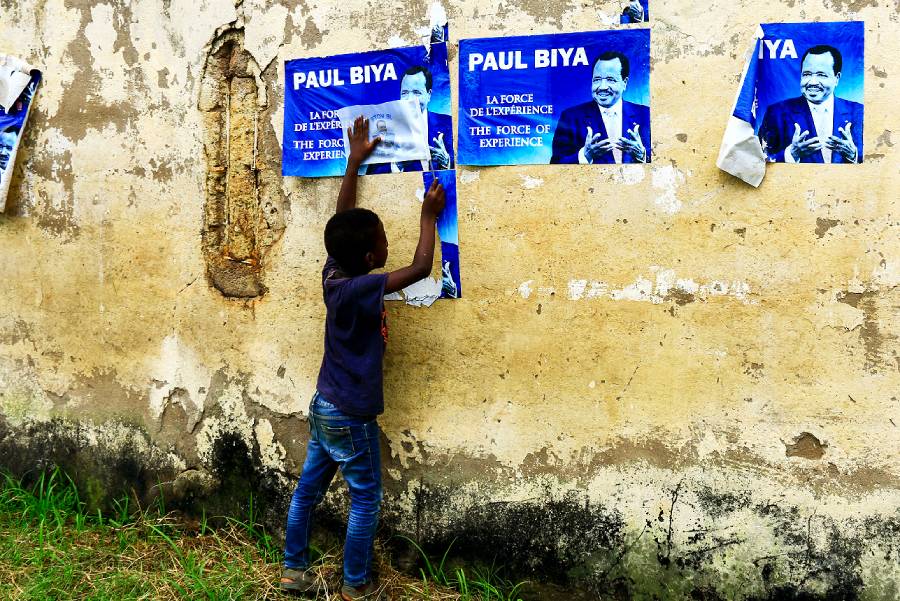
Two days later, on November 6, 1982, Prime Minister Paul Biya was sworn in as the second president of Cameroon. The man who had been a career civil servant, a technocrat plucked from relative obscurity, now held the highest office in the land.
The transition was peaceful. The world applauded. Cameroon seemed to be a model of African democratic maturity.
But beneath the surface, something was already cracking.
Who Was Ahmadou Ahidjo?
Ahmadou Ahidjo was born in 1924 in Garoua, in northern Cameroon. He was a Fulani Muslim from a region that had historically been remote from the power centers of Douala and Yaoundé.
He rose through the colonial administration and entered politics in the 1950s. By 1958, he was Prime Minister of French Cameroon. On January 1, 1960, he became the first president of an independent Cameroon.
His achievements were substantial:
- He united the former French colony with the British Southern Cameroons in 1961, creating a federal state
- He suppressed the UPC rebellion, ending a violent insurgency that threatened the new nation
- He abolished the federal system in 1972, centralizing power in Yaoundé
- He maintained close ties with France, ensuring economic and military support
But Ahidjo also ruled with an iron fist. The one-party state he created left no room for opposition. The constitution was rewritten to concentrate power in the presidency. Elections were rituals of affirmation, not contests of ideas.
By 1982, Ahidjo had been in power for a lifetime. But his resignation was not the end of his ambitions.
Who Was Paul Biya?
Paul Biya was born in 1933 in Mvomeka'a, a small village in the southern forest region. Unlike Ahidjo, he was a Christian from the Beti ethnic group — a minority in national politics.
He was educated in France, studying law and political science at the Sorbonne and the Institut d'Études Politiques in Paris. He returned to Cameroon as a civil servant, rising through the ranks of the presidency.
Biya was quiet, reserved, and meticulous — the opposite of Ahidjo's charismatic, paternalistic style. He was known as a "technocrat," a man of files and procedures rather than public speeches.
In 1975, Ahidjo appointed him Prime Minister. It was a surprise. Biya was young, relatively unknown, and had no independent power base. He was loyal to Ahidjo — or so Ahidjo believed.
When Ahidjo chose him as successor, few objected. Biya seemed harmless.
The Transition That Wasn't
The handover on November 6, 1982, was smooth. Ahidjo remained president of the CNU, the ruling party. He intended to rule from behind the throne. Biya would manage daily affairs, but Ahidjo would still control the party, the security services, and the military.
In plain English: Ahidjo resigned as president but expected to remain the real power in Cameroon. Biya was supposed to be a caretaker, not a true leader.
But Biya had other ideas.
Within months, he began consolidating his own power. He demanded that the party apparatus report to him, not to Ahidjo. He began replacing Ahidjo's loyalists with his own allies. He signaled that he intended to be president in fact, not just in name.
Ahidjo was furious. He had created a monster.
The Break
By mid-1983, the conflict between the two men was public. Ahidjo resigned as president of the CNU and went into exile in France. From there, he continued to pull strings. The security services were still loyal to him. The Republican Guard, the elite military unit, remained under the command of his allies.
Biya moved swiftly. He purged Ahidjo's supporters from the government. He arrested several high-ranking officials accused of plotting against him. He reorganized the military.
The country held its breath. Civil war seemed possible.
In July 1983, Biya announced the discovery of a plot to overthrow him. He accused Ahidjo of orchestrating it from his exile in France. Ahidjo denied everything, but the damage was done.
The former president was condemned to death in absentia. Biya commuted the sentence — but the message was clear: Ahidjo was no longer untouchable.
In plain English: The student had defeated the master. Biya had won the power struggle. But Ahidjo's allies remained in place, waiting for their moment.
The Coup That Failed
On April 6, 1984, eighteen months after Biya took office, the Republican Guard struck.
Military units loyal to Ahidjo seized key installations in Yaoundé. The presidential palace was surrounded. For two days, the capital was a battlefield.
Biya survived. He escaped the palace before it was captured. Loyal troops, led by his army chief, fought back street by street. By April 8, the coup was crushed.
Official figures claimed seventy-one dead. Unofficial estimates were much higher — perhaps hundreds, perhaps thousands.
The coup attempt changed everything.
Biya now had a reason to purge every remaining Ahidjo loyalist. Dozens were arrested. Some were executed. The Republican Guard was disbanded and reconstituted. The balance of power shifted permanently toward Biya.
After April 6, 1984, there was no doubt: Paul Biya was the president of Cameroon.
But What If
The story of the 1982 transition is not simply one of political miscalculation. There is a darker, more subterranean current to consider—one that leads away from the presidential palace in Yaoundé and toward the quiet examination rooms of a French medical clinic.
What if Ahidjo had chosen a different successor?
The question is not idle. Ahidjo had many options. He could have chosen a fellow northerner, a Fulani Muslim who would have maintained the regional balance of power. He could have chosen a military officer with a loyal following. He could have chosen a caretaker who would have accepted a symbolic role.
Instead, he chose Paul Biya — and lost control of his own creation.
Consider the counterfactual:
If Ahidjo had chosen a different successor, the 1984 coup attempt might not have occurred. The Republican Guard, loyal to Ahidjo, might have accepted a president from the northern establishment. The violence of April 1984 would have been avoided. Cameroon's political trajectory would have been different. The one-party state might have persisted longer, or transitioned to multi-party democracy under different leadership.
But here is the deeper counterfactual.
What if the French Doctor Had Told the Truth?
Credible research suggests that Ahidjo did not want to resign in 1982. He may have been the victim of a sophisticated ruse. Accounts indicate that he was deceived by his French doctor, potentially acting on behalf of French intelligence services, into believing he was terminally ill with a fast-acting cancer. The message was clear: step down now, secure your legacy, and live out your final days in comfort.
Persuaded by this "authority," Ahidjo set the transition in motion. When he discovered the truth—that he had been lied to, that he was not dying—it was too late. The machinery of succession had already turned. His desperate attempt to reclaim power led to a bitter feud, a foiled coup attempt, and ultimately a death sentence passed down in absentia from his exile in France.
If Ahidjo had not been deceived, he almost certainly would not have resigned in 1982. He was only 58, relatively young, and there was no public pressure for him to leave. He would have remained president, likely into the 1990s.
This would have meant:
- No Biya Presidency (or a delayed one): The 40-year reign of Paul Biya might never have happened. Ahidjo's grip on power was absolute, and he would not have been a caretaker for his own successor.
- A Different Democratic Transition: The push for multi-party democracy came to Cameroon in 1990. It was Biya who legalized opposition parties under pressure. How would Ahidjo, the man who created the single-party state, have navigated this "winds of change" period? Would Cameroon have transitioned to democracy earlier, later, or not at all?
- Different Franco-Cameroon Relations: Ahidjo was a French ally, but he was not a puppet. The manipulation of his resignation suggests France saw him as an obstacle. A continued Ahidjo presidency might have led to a more nationalist, less subservient foreign policy.
What if Ahidjo had never resigned at all?
If Ahidjo had remained president until his death (he died in 1989), Cameroon would have had a different transition at a different time. The Cold War was ending in 1989. Africa was being pushed toward multi-party democracy. Ahidjo would have faced pressures that Biya faced a few years later. Would Ahidjo have handled the democratic transition better? Or worse?
What if the 1984 coup had succeeded?
If the Republican Guard had captured the presidential palace and killed Biya, what then? Would Ahidjo have returned from exile? Would a military junta have taken power? Would Cameroon have descended into the cycle of coups and counter-coups that plagued neighboring countries?
Cameroon has been remarkably stable in one sense: there has been only one attempted coup in its history. That stability is partly luck, partly repression, partly the structure of the one-party state. If the 1984 coup had succeeded, that luck would have run out.
This angle transforms the transition from a simple story of political miscalculation into a complex drama of international intrigue, medical deception, and the quiet violence of neo-colonialism. It forces us to ask not just "What if Ahidjo had chosen differently?" but "What if Cameroon was allowed to choose for itself?"
The Aftermath: Biya's Long Reign
After the 1984 coup attempt, Biya consolidated his power completely. The one-party state continued until 1990, when pressure for democratization forced him to legalize opposition parties.
But Biya did not lose power. He adapted.
He won every election since — by margins that international observers have consistently questioned. His party, the Cameroon People's Democratic Movement (RDPC), dominates the National Assembly. The constitution has been amended to allow him to run for president indefinitely.
By 2026, Biya will be ninety-three years old. He will have been president for forty-four years.
The question that echoes across Cameroonian politics is the same one that has haunted the country since 1982: What comes after Biya?
Will there be another peaceful transition? Another handover that surprises the world? Another quiet November day when a new president is sworn in?
Or will the end of Biya's reign be different — chaotic, violent, uncertain?
The man who was chosen as a caretaker has become an institution. The student who defeated his master has become the master of time itself.
Key Figures

Ahmadou Ahidjo (1924-1989)
- First President of Cameroon (1960-1982)
- Unified French and British Cameroons
- Centralized power in 1972 referendum
- Resigned in 1982, died in exile in 1989
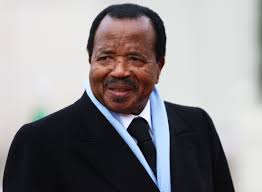
Paul Biya (born 1933)
- Second President of Cameroon (1982-present)
- Former technocrat and Prime Minister
- Survived 1984 coup attempt
- One of the world's longest-serving leaders
Timeline of Key Events
Ahidjo resigns; Biya announced as successor
Biya sworn in as President
Power struggle becomes public; Ahidjo goes into exile
Biya announces discovery of plot; Ahidjo condemned
Republican Guard coup attempt
Coup crushed; Biya emerges triumphant
Ahidjo dies in Senegal
Biya legalizes opposition parties
Biya wins first multi-party election
Three Intriguing Questions
1. The Caretaker Who Became King
Ahidjo chose Paul Biya because he seemed weak, a technocrat without his own power base. Biya proved him wrong. What did Ahidjo misjudge about his successor? And what does that misjudgment tell us about the nature of political power in Cameroon?
2. The Counterfactual of the French Doctor
If Ahidjo was indeed tricked by French intelligence into resigning, what does that say about the depth of foreign influence in post-colonial Africa? Is Cameroon's political destiny truly its own, or has it been quietly guided by outside hands for decades?
3. The Succession Question
Biya is now ninety-three years old. The constitution has been amended to allow him to run indefinitely. But no one rules forever. When Biya leaves power — through death, incapacity, or resignation — will there be another peaceful transition? Or will the end of his reign unravel the stability he has maintained for four decades?
Published April 17, 2026 — 43 years 5 months after the transition