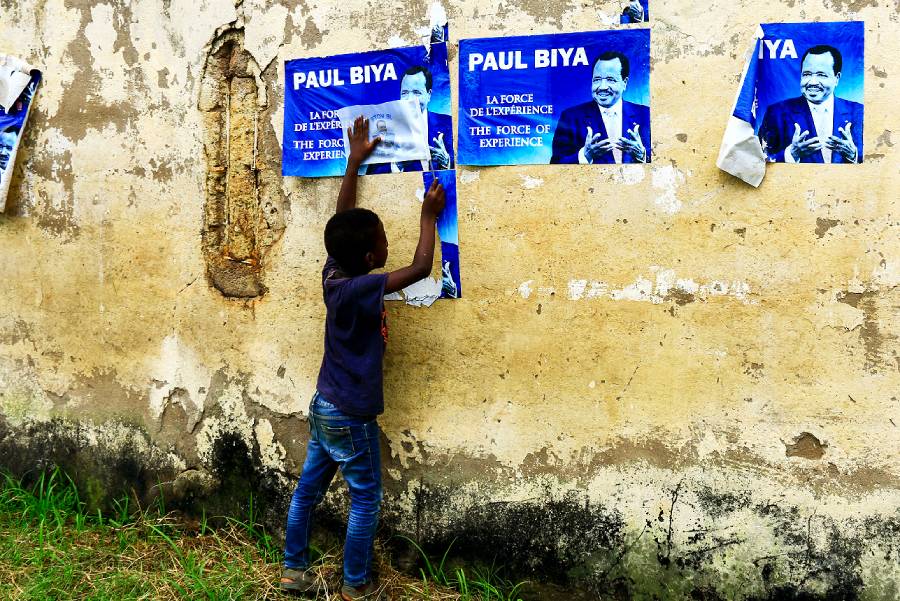
History is a fragile chain of moments. In the official archives of Cameroon, the October 11, 1992 presidential election is recorded as the triumphant confirmation of the ruling regime’s mandate under a newly born multi-party system. We are told that the incumbent president, Paul Biya, successfully weathered the storm of the "Ghost Town" (Villes Mortes) strikes, securing a legitimate democratic victory.
But history is only inevitable until you look at the raw numbers.
What if the fractured opposition had put aside their personal ambitions? What if the key leaders had formed an iron-clad coalition just weeks before the ballot? In our true timeline, Paul Biya won by a razor-thin margin of less than 4% over the legendary Chairman of the Social Democratic Front (SDF), Ni John Fru Ndi. It was the closest Cameroon ever came to a peaceful, democratic transition of power.
Welcome to 237 Rewind. In this post, we unpack the mathematical tragedy and the strategic blunders of October 1992 - 2025, exploring how a simple fracture among opposition leaders permanently altered the destiny of our nation.
"The 1992 election wasn't won by Yaoundé. It was lost in the divided meeting rooms of the opposition." — 237 Rewind Analytical Insight
From Ahidjo’s Monolith to Biya’s Awakening
To understand the immense gravity of the 1992 crisis, we must look at the rigid political structure that preceded it. The architecture of the Cameroonian state was built as an absolute monolith by our first president, Ahmadou Ahidjo.
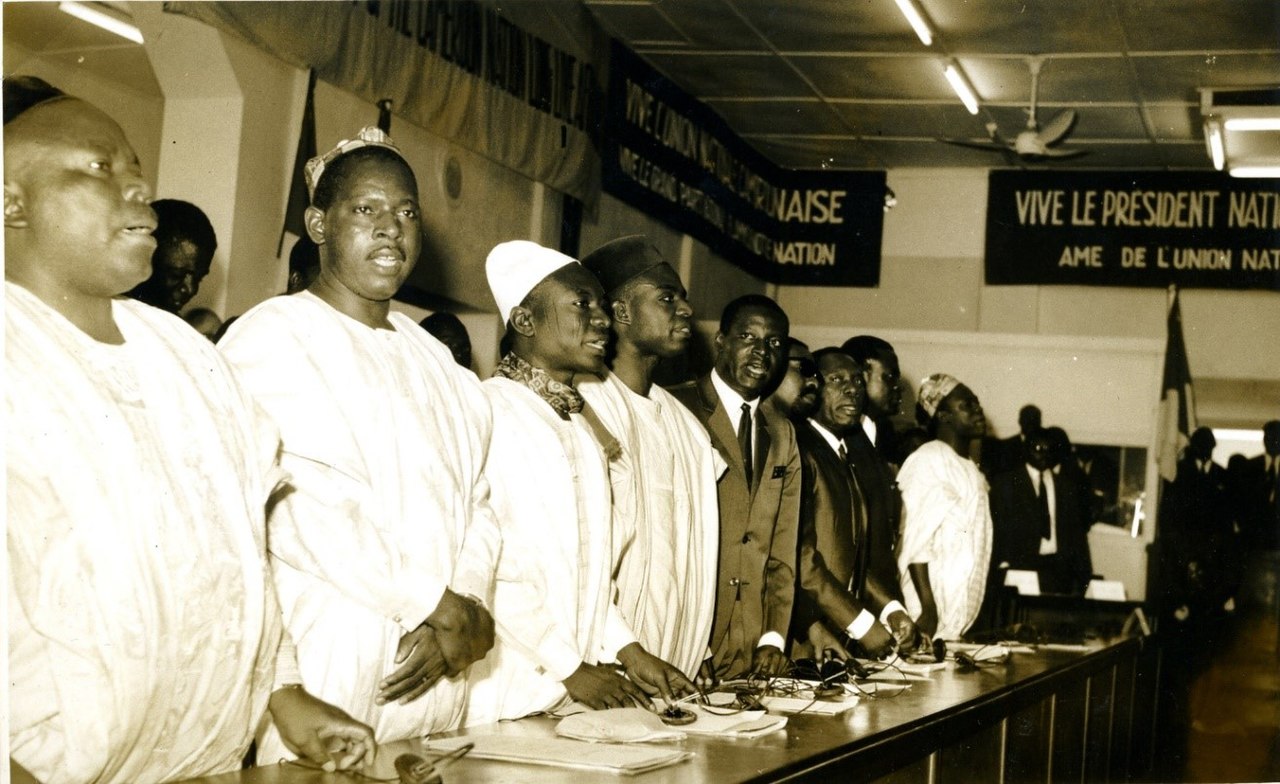
In 1966, Ahidjo systematically pressured all existing political parties to dissolve and merge into his single-party machine. On September 1, 1966, the Cameroon National Union (CNU/UNC) was launced.
Ahidjo justified this aggressive transition to a one-party system through three core political arguments:
The Tribal Division Argument: He publicly claimed that multi-party politics in a newly independent nation merely weaponized tribalism, arguing that regional political parties would tear Cameroon apart along ethnic lines.
The National Unity Mandate: He asserted that total national integration between the newly unified Francophone and Anglophone territories required a single, centralized laboratory of national thought.
The Economic Development Doctrine: He argued that a young, developing nation could not afford the political instability, endless debates, and parliamentary gridlock of multi-party democracy, stating that all national energy needed to be focused strictly on state-guided economic production.
When Ahidjo unexpectedly resigned in November 1982, handing the keys of the presidency to his Prime Minister, Paul Biya, the political monolith did not open up.
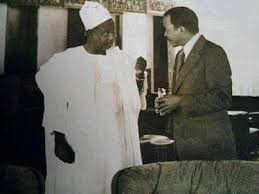
Instead, Biya took deliberate, calculated steps to walk deeper down the very same centralized path:
The 1983-1984 Purges: Following a rapid political fallout and an alleged coup attempt by Ahidjo loyalists in April 1984, Biya ruthlessly purged the military, the civil service, and the party apparatus of old guard northern elites to centralize power entirely around his own loyalists.
The 1985 Party Rebranding: At the historic Bamenda Congress in March 1985, Biya officially dissolved Ahidjo's CNU and rebranded it as the Cameroon People’s Democratic Movement (CPDM/RDPC). While he framed this as the birth of a more progressive era, it remained a legally enforced single-party machine with Biya at its absolute helm.
The 1990 Anti-Subversion Clampdown: When lawyers, journalists, and activists began demanding a return to multi-party democracy in early 1990 after the arrest of Maître Yondo Mandengue Black, Biya’s regime aggressively enforced the draconian 1962 anti-subversion laws, deploying state intelligence and military forces to arrest dissidents who tried to form independent political associations.
By 1990, however, the economic hardships of structural adjustment and a global wave of pro-democracy movements cracked the monolith. The street was tired of the single-party stasis.
The absolute monopoly of power Ahidjo had constructed, and Biya had meticulously consolidated, was about to face its first real domestic challenge.
The Spark in the Littoral — The Yondo Black Affair
On February 19, 1990, agents of the CENER (the regime’s feared secret police) aggressively stormed the law offices of Maître Yondo Mandengue Black, a distinguished human rights defender and the former Bâtonnier (President) of the Cameroon Bar Association.
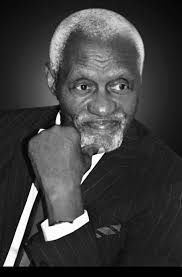
The state intelligence apparatus accused him of committing high treason by secretly drafting documents to form an alternative political party, which was a severe, punishable crime under the 1962 anti-subversion laws
Yondo Black was arrested alongside eleven key progressive intellectuals, labor organizers, and journalists, forming a group known historically as The Douala Ten including iconic figures like:
Anicet Ekané: A fierce, brilliant leftist intellectual and seasoned political organizer from the Littoral Region. Heavily influenced by Marxist-Leninist thought and the historic anti-colonial ideals of the UPC, Ekané was the strategic backbone of the group. His presence in the meeting was specifically aimed at converting the legal brief into a mass working-class political movement. He would later go on to found the MANIDEM party.
Henriette Ekwé: A legendary, trailblazing investigative journalist, feminist icon, and radical nationalist. Ekwé brought an uncompromising revolutionary edge to the room. She served as the communication loop, ensuring that the clandestine push for multi-party democracy could pierce through the heavy state censorship and reach the international press, including Radio France Internationale (RFI).
Vincent Feko: A deeply disciplined, unyielding Anglophone activist, writer, and intellectual. Feko functioned as the early bridge between the Anglophone constitutional grievances and the Francophone pro-democracy networks in Douala.
The Other Associates (The Professionals): The sweep also swept up critical professionals who provided logistical and administrative cover for the operation, including Jean-Michel Tekam (a progressive activist), Charles René Djon Djon, and several trade unionists who were tired of the state-controlled labor syndicates.
Among those arrested that day was also Albert Womah Mukong.
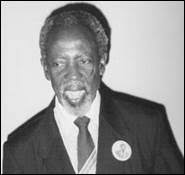
Born in Babanki Tungo in the Northwest Region, Mukong was a veteran writer and an absolute giant of the independence era. He was a man who simply could not be broken by state terror.
Mukong had been an active member of the original, radical UPC networks in the 1950s and had spent years during Ahmadou Ahidjo's regime languishing in some of the country’s most notorious political prisons—including the feared Brigade Mixte Mobile (BMM) camp in Kondengui. He later immortalized these horrors in his famous dissident book, Prisoner Without a Crime.
His arrest alongside Yondo Black in February 1990 was a monumental event because Mukong served as the living tissue between the Francophone and Anglophone resistance movements.
While the military tribunal thought they could silence him by putting him back in a cell, Mukong used the trial to fiercely articulate the legal right to a multi-party system.
When he was finally released due to intense international pressure, Mukong did not retreat into safety. Instead, he took the exact same legal and political blueprints discussed in Yondo Black’s Douala office, climbed the mountains to Bamenda, and walked straight into the secret living rooms where The Study Group was meeting.
Birth of the SDF
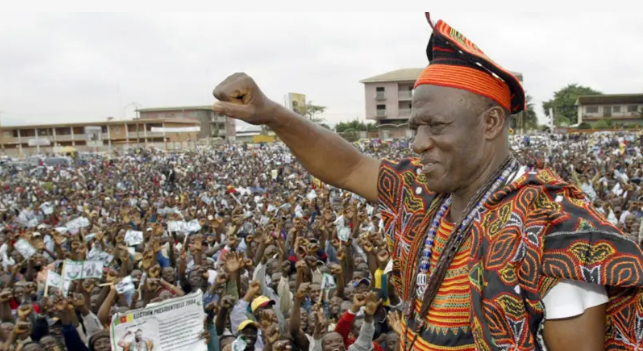
The regime intended the Yondo Black trial to serve as a terrifying warning to suppress any democratic ambitions. Instead, the strategy completely backfired. Their arrest triggered an extraordinary wave of international outrage and mobilized Cameroon's lawyers, who went on a massive solidarity strike.
The trial turned into a public, political indictment of the single-party state. Though Yondo Black was convicted and given a short prison sentence, the sheer domestic and international pressure broke the regime’s nerves.
It was the public defense of Yondo Black and his comrades that legally de-fanged the anti-subversion laws, signaling that the state could no longer completely enforce its political monopoly. The Yondo Black Affair was the structural blueprint that proved the single-party monolith could bleed.
In Bamenda, highly educated Anglophone thinkers historically known as The Study Group (or The Nine) continued meeting secretly in private homes and hidden backrooms across Bamenda.
Operating under the constant threat of state surveillance and the draconian 1962 anti-subversion laws, these men functioned as a shadow constitutional committee.
The core brains of this secret group included:
Justice Nyo' Wakai: A brilliant, retired progressive jurist who provided the legal blueprint to challenge the state's one-party laws.
Dr. Carlson Anyangwe: A sharp academic and international legal scholar who helped craft the party’s ideological framework.
Albert Womah Mukong: the legendary, veteran pro-democracy activist who had survived Ahidjo’s political prisons and the Yondo Black Affair.
Dr. Siga Asanga: A dedicated university lecturer who served as the intellectual anchor and the first Secretary-General of the movement.
Together with five other clandestine technicians, they spent weeks meticulously drafting the party's progressive manifesto, social-democratic constitution, and its iconic slogan: Power to the People!
Once the ideological weapon was built, the intellectuals recognized they needed a leader with immense physical bravery, local credibility, and a populist touch to publicly launch the project.
They approached Ni John Fru Ndi, a prominent, charismatic Bamenda bookshop owner and independent progressive who was well-respected within the local community. Fru Ndi accepted the challenge, formally stepping forward to serve as the National Chairman.
The date was set for May 26, 1990. The state issued immediate, strict military bans. Despite columns of armed troops blocking the streets, Fru Ndi and thousands of ordinary citizens marched directly to Liberty Square in Bamenda to forcefully launch the party, permanently breaking the single-party taboo.
The regime’s response to the launch was immediate and lethal. Security forces opened fire into the jubilant crowds of youths surging through the streets.
The 1990 Cover-Up: Henri Bandolo
To cover up the state terror, the regime's communication machine immediately went to work.
Henri Bandolo, the Minister of Information and Culture at the time, authorized a infamous state radio and TV broadcast on May 28, 1990.
The official media broadcasted the outright lie that no military bullets were fired, claiming the casualties were simply "trampled by mud in a rain-soaked ditch" while trying to escape the security forces.
But history records the truth. The six young martyrs who paid the ultimate price for multi-party freedom on that bloody afternoon of May 26, 1990, were:
Juliette Sikod – A young female student from Bali, Mezam Division.
Tifuh Mathias Teboh – A dedicated young student.
Toje Evaristus Chatum – A passionate student demonstrator.
Asanji Christopher Fombi – A courageous young student.
Nfon Edwin Jatop – A hard-working tailor and youth organizer.
Fidelis Chosi Mankam – A local corn mill operator from the community.
The sacrifice of these six citizens catalyzed a massive wave of student protests across the university campus in Yaoundé, rendering the one-party monolith completely unsustainable.
The Propaganda War: "Zéro Mort" Scandal
The political ceasefire did not last. Fast-forward one year later to April and May 1991. The University of Yaoundé erupted into a second, far more violent wave of strikes.
A highly organized, clandestine student movement called "Le Parlement" (The Parliament) occupied the campus, demanding a Sovereign National Conference and better academic living conditions.
To mock the state's political infrastructure, the student vanguard explicitly structured its leadership like a formal government cabinet.
This radical resistance was spearheaded by three fearless young student intellectuals:
Senfo Tonkam (The "President"): The undisputed supreme leader and chief strategist who signed the movement's leaflets and openly challenged the state's educational monopoly.
Benjamin Batchajanga (The "Prime Minister"): The internal coordinator who managed the logistics of the strikes across different university faculties.
Robert Waffo Wanto (The "Minister of Defense"): The head of the student "Auto-Défense" (Self-Defense) units, who armed students with sticks and stones to guard campus gates against midnight military raids.
The regime launched a brutal military invasion of the university campus to crush the student rebellion. Rumors and independent student leaflets immediately flooded the country, claiming that security forces had slaughtered dozens of students on campus and secretly buried them in mass graves.
To break this escalating crisis, the newly appointed Minister of Information and Culture, Augustin Kontchou Kouomegni, held a high-stakes press conference on May 14, 1991.
Speaking specifically about the military raids on the university campus, Kontchou infamously asserted that there were "zéro mort et même zéro blessé grave" (zero deaths and zero serious injuries).
This blatant denial of reality—coming exactly a year after Henri Bandolo's "mud" lie—earned Kontchou the permanent, mocking nickname of "Minister Zéro Mort" among the populace.
Instead of calming the waters, Kontchou's propaganda fueled the flames of public anger and sealed the fate of the student leaders.
Following the strikes, the regime launched a relentless, targeted manhunt. The secret police hunted down, arrested, and tortured the core cabinet of Le Parlement.
Ultimately, Senfo Tonkam, Benjamin Batchajanga, and Robert Waffo Wanto were all forced into long, painful political exiles in Europe, permanently scattering the intellectual brains of the student rebellion.
Yet, the state's propaganda backfired completely. It insulted the memory of all the martyrs of the democratic struggle, deeply radicalized the student population, and proved to the entire nation that the state's official communication machine would always prioritize regime survival over human life.
The "Zéro Mort" scandal converted localized student anger into a nationwide, unstoppable demand for the historic October 1992 presidential election.
How the Regime Was Forced to Yield
In the immediate aftermath of the the toxic "Zéro Mort" propaganda campaign, President Paul Biya attempted to maintain the single-party monolith through sheer administrative defiance.
On June 1, 1990, the state organized massive, forced counter-marches across Yaoundé, where CPDM loyalists paraded under banners rejecting multi-party democracy as a "foreign import" that would bring chaos. But behind the scenes, the walls of the regime were closing in.
The pressure that broke Biya's resistance came from three unstoppable fronts:
The La Baule Doctrine:
On June 20, 1990, French President François Mitterrand delivered a historic speech at the Franco-African Summit in La Baule.
Mitterrand explicitly warned African leaders that French foreign aid, loans, and military backing would henceforth be conditional on structural steps toward multi-party democratization. Cut off from his primary financial lifeline in Paris, Biya’s economic leverage vanished overnight.
The National Coordination of Opposition Parties:
Emboldened by the SDF's bravery, underground political movements across the country began unifying.
Civil society, progressive lawyers, and radical trade unions launched the "National Coordination," orchestrating a devastating civil disobedience campaign that would later culminate in the legendary "Ghost Town" (Villes Mortes) strikes.
Entire cities were paralyzed, tax revenues plummeted to zero, and the state became economically ungovernable.
The Intellectual Rebellion:
On June 27, 1990, during a highly tense CPDM ordinary congress in Yaoundé, the internal cracks became public.
Prominent, progressive Francophone elites within Biya’s own party collectively known as the "Reformists" (les réformistes) or the "Progressives" openly revolted against the hardliners, echoing the demands of the street.
The movement was led primarily by Jean-Jacques Sengat Kuo, a highly influential intellectual, former close adviser to the presidency, and a key strategist who had actually helped write the ruling party's original charter.
Other prominent members included:
Charly Gabriel Mbock: A prominent academic, writer, and intellectual.
François Borgia Marie Evembe: A famous author and critical thinker.
Moukouri Manga Bell: A progressive political figure and elite from Douala.
During the highly charged June 1990 CPDM Ordinary Congress in Yaoundé, these men and women openly broke ranks with party hardliners.
While the conservatives were organizing national street marches under the slogan "No to precipitated multipartyism," Sengat Kuo and his progressive allies argued from the inside that the party would destroy itself if it ignored the people's cries for freedom.
They demanded that the CPDM accept political pluralism and prepare to face opposition parties.
The Legal Surrender: The December 1990 "Liberty Laws"
Recognizing that absolute repression would lead to his direct overthrow, Paul Biya executed a classic survival maneuver: he chose to control the democratization process rather than be destroyed by it.
On December 19, 1990, the National Assembly formally enacted a sweeping package of legislative reforms known historically as The Liberty Laws (Les Lois de la Liberté).
Chief among these was Law No. 90/056 on Political Parties. This historic statute officially dismantled the 1966 one-party monopoly, legally permitting any group of citizens to form an independent political party without facing subversion charges.
However, the Liberty Laws were a double-edged sword. While they legalized the Social Democratic Front (SDF) and dozens of other parties, the regime carefully inserted structural traps into the text.
The state maintained total control over the registration process, heavily restricted public demonstrations, and kept a tight grip on the electoral machinery.
The single-party state was dead on paper, but the rules of the new multi-party game were written entirely by the architect in Yaoundé, setting a direct, uneven collision course for the upcoming Sunday, October 11, 1992 presidential election.
The Key Players of 1992 Elections
The historic 1992 showdown was dictated by four towering figures who held the fate of the republic in their hands, each representing a different facet of Cameroon's fractured institutional DNA:
Paul Biya (The Incumbent): The second President of Cameroon, born in Mvomeka'a in the South Region. A quiet, deeply strategic, French-trained technocrat who graduated from Sciences Po Paris, Biya excelled at elite survival politics. Having spent a decade consolidating his control after the 1984 coup attempt, he was a master of the state apparatus. Facing unprecedented civil unrest, he skillfully wielded the vast resources of the state, military intelligence, and administrative networks to split his challengers and preserve his presidency at all costs.
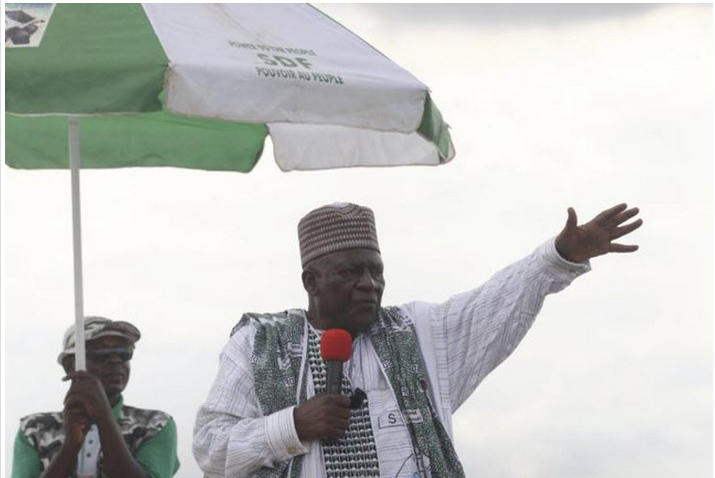
Ni John Fru Ndi (The Challenger): A charismatic, completely fearless former bookseller from Baba II in the Northwest Region. As the National Chairman of the Social Democratic Front (SDF), he emerged as the ultimate symbol of popular defiance, speaking directly for the marginalized, common citizen. Wielding immense street-level leverage that uniquely crossed linguistic lines into Francophone cities like Douala and Bafoussam, his populist charm and unwavering anti-regime rhetoric made him the chief existential threat to the Yaoundé establishment.
Bello Bouba Maigari (The Spoiler): A brilliant, aristocratic northern politician born in Garoua, who had previously served as Biya’s very first Prime Minister from 1982 to 1983 before fleeing into a long exile in Nigeria. Returning to lead the National Union for Democracy and Progress (UNDP), he commanded the powerful, highly conservative "Grand-North" voting bloc. Driven by his own intense presidential ambitions to reclaim national leadership, his categorical refusal to step aside or merge his northern base into Fru Ndi’s coalition split the change-seeking electorate down the middle.
Alexis Dipanda Mouelle (The Arbiter): The First President of the Supreme Court of Cameroon, born in Akwa, Douala, and trained in high-level judicial magistracy in Paris. A highly respected, rigid legal technocrat, Mouelle was thrust into the ultimate historical hot seat when the constitution tasked him with validating the highly contested election tallies. Operating under intense pressure from both a furious populace demanding change and an entrenched regime demanding survival, his actions would define the legal boundaries of the crisis.
The Math of the Fracture and Mouelle's Verdict
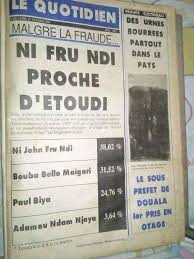
On Sunday, October 11, 1992, millions of Cameroonians stood in long, tense lines to cast their ballots in the country’s first competitive multi-party presidential election.
The political stakes were incredibly high. Because the regime had strategically engineered a single-round voting system — where a simple plurality wins instantly without a second-round runoff — the math was simple.
A unified opposition front would guarantee an absolute landslide victory for change.
Instead, the opposition fell into a trap of regional egos and fractured negotiations. The final, official results announced by the state exposed the devastating cost of that 4% fracture:
| Candidate (Party) | Votes | Percentage |
|---|---|---|
| Paul Biya (CPDM/RDPC) | 1,185,466 | 39.98% (Winner) |
| Ni John Fru Ndi (SDF / Union for Change) | 1,066,602 | 35.97% |
| Bello Bouba Maigari (UNDP) | 569,887 | 19.22% |
| Dr. Adamou Ndam Njoya (CDU/UDC) | 107,411 | 3.62% |
| Jean-Jacques Ekindi (Progressive Movement) | 37,920 | 1.26% |
Combined, the opposition candidates captured a massive 56.45% of the popular vote. But because Bello Bouba Maigari refused to merge his powerful Grand-North base into Fru Ndi's "Union for Change" coalition, the vote was split down the middle. Paul Biya slipped right through the narrow 4.01% gap to retain the presidency.
The opposition collectively won 56.45% of the vote, but because their votes were split among four candidates, the incumbent won with only 39.98%. Under a single-round plurality system, fragmentation is the incumbent's greatest weapon. L'opposition a collectivement remporté 56,45 % des voix, mais parce que leurs votes étaient répartis entre quatre candidats, le sortant l'a emporté avec seulement 39,98 %. Dans un système uninominal à un tour, la fragmentation est la meilleure arme du sortant.
The Constitutional Standoff: "My Hands Are Tied"
The announcement of the numbers immediately pushed Cameroon to the brink of a civil war. The SDF and its coalition partners rejected the state's tallies.
They published their own independent polling records, backed by international observers from the National Democratic Institute (NDI), which showed that Fru Ndi had actually won the election with 38.6% over Biya’s 36.6%. The NDI openly stated that the election suffered from "widespread, systemic electoral fraud."
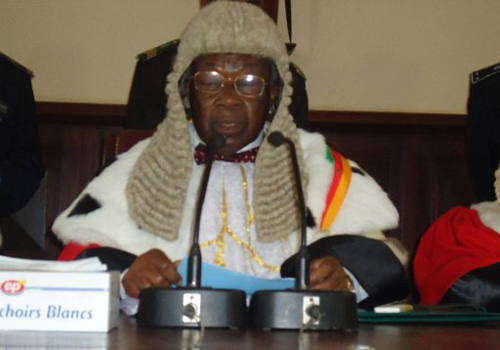
The explosive dispute was dragged straight to the Supreme Court in Yaoundé. On October 23, 1992, the nation came to a complete standstill as the First President of the Supreme Court, Alexis Dipanda Mouelle, stepped up to the microphone to read the definitive verdict.
In an extraordinary, historic speech that shocked international observers, Chief Justice Mouelle openly confessed on the record that the election was riddled with massive irregularities, missing tally sheets, voter suppression, and phantom polling stations.
Yet, in a phrase that permanently defined his legal legacy, he declared that the Supreme Court was powerless to act, stating that "his hands were tied" (les mains liées).
Mouelle argued that under the strict text of the pre-existing colonial-era electoral laws, the Supreme Court only possessed the administrative authority to count and declare the numbers sent by the ministry, but lacked the explicit constitutional power to investigate fraud, overturn the margins, or annul the election. With those tied hands, he officially declared Paul Biya the re-elected president.
The Siege of Ntarikon and the Human Shield
The Court's verdict triggered immediate, furious uprisings across Bamenda. Angry youths filled the streets, burning down the homes of local CPDM elites.
The regime struck back with absolute administrative force. On October 27, 1992, Paul Biya declared a strict, rolling state of emergency across the Northwest Region and placed Ni John Fru Ndi under a grueling, indefinite military house arrest at his compound in Ntarikon, Bamenda.
The state prepared to deploy elite troops to secretly arrest or permanently liquidate the Chairman. But then, something remarkable happened.
Learning of the impending military raid, over 200 ordinary, unarmed citizens—including local tailors, teachers, market women, radical youth, and the famous Takubeng rallied to protect the chairman.
This ancient secret society of elderly Grassfields women and grandmothers marched directly to the frontlines.
Invoking a profound ancestral custom, the Takubeng women stripped naked and blocked the military checkpoints leading to the compound. To the heavily armed state soldiers, looking upon the nakedness of these mothers carried an absolute, terrifying generational curse.
The military machine froze. Heavily armed regiments lowered their eyes and refused to advance past the naked elders. Alongside over 200 ordinary youth, tailors, and market women, the Takubeng formed an unbreakable human and spiritual shield that kept the state at bay for nearly two months, successfully de-escalating the threat of immediate military execution.
The Permanent Curse: A Thirty-Year Repeat
he tragic mathematical fracture of October 1992 did not end when the Supreme Court closed its ledgers. Instead, it baked a permanent curse of division into the DNA of the Cameroonian opposition. It set a strategic failure that has repeated itself across every single presidential cycle for over three decades.
| Election Year | Opposition Strategy | Regime Outcome |
|---|---|---|
| 1992 | SDF / UNDP Split (4% Gap) | Biya Wins (39.9%) |
| 2004 / 2011 | Multi-Candidate Fracture | Biya Wins Landslide |
| 2018 | Kamto / Libii / Osih Split | Biya Wins (71.2%) |
The Anglophone Crisis and the Downfall of the SDF
For over twenty years, the Social Democratic Front (SDF) remained the primary heavyweight of the opposition, anchored by its bedrock fortress in the Anglophone Northwest and Southwest regions. However, the eruption of the Anglophone Crisis in late 2016 delivered a fatal, existential blow to the party from which it would never recover.
As the peaceful corporate strikes by teachers and lawyers degenerated into a brutal, bloody armed conflict, the political middle ground vanished. The Anglophone population completely stopped aligning with the SDF for two distinct reasons:
The Radicalization of the Masses: The population of the Northwest and Southwest regions became deeply alienated, viewing the party’s historical 1990s platform of "peaceful federalism" within the state system as entirely obsolete in a landscape dominated by daily gunfire, military crackdowns, and structural suffering.
The Separatist Backlash: Armed separatist militias (Amba Boys) completely rejected the SDF. They viewed Ni John Fru Ndi and his parliamentarians as traitors and collaborators for continuing to sit in the National Assembly in Yaoundé and accepting state salaries instead of boycotting the system entirely.
The backlash was violent and intensely personal. Separatists targeted the party's leadership, burning down Chairman Fru Ndi’s residential villa and physically kidnapping him in 2019 to force a legislative boycott. Cut off from the trust of its ancestral Grassfields heartland, the vanguard party of 1992 began to rapidly disintegrate from within.
The definitive end of an era was finalized when Chairman Ni John Fru Ndi passed away in Yaoundé on June 12, 2023, after a prolonged illness. The bookseller from Bamenda who had once made the state monolith bleed was given a state-recognized burial, leaving behind a party structurally fractured by leadership purges and total regional displacement.
The October 2025 Cycle: The Eternal System Confirmed
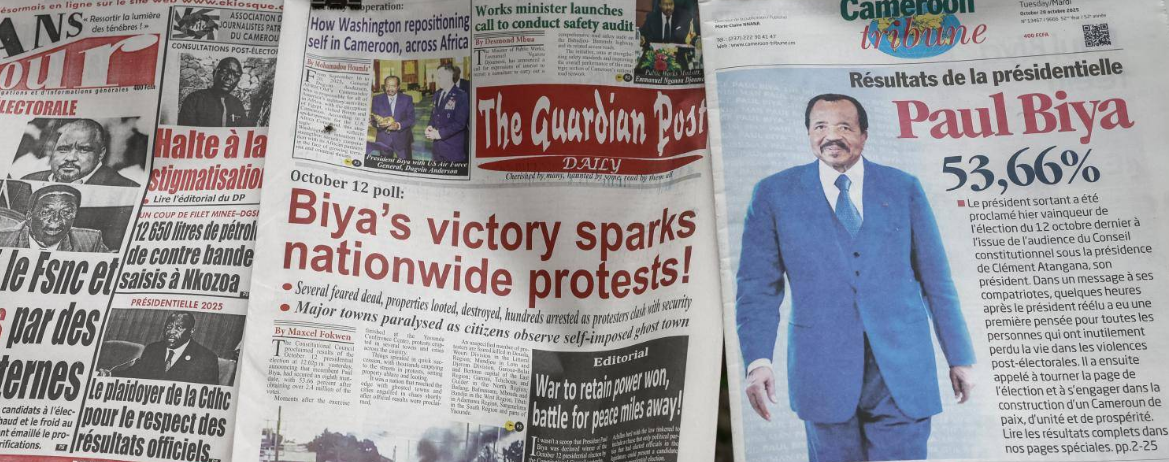
The ultimate proof that the 1992 playbook remains alive and well came during Cameroon’s presidential election on Sunday, October 12, 2025.
For casual political observers, the election was framed as a battle between the entrenched regime and new-generation opposition faces like Cabral Libii. But for true students of Cameroonian history, the real structural anchors of the election were two familiar names from the 1992 past: Bello Bouba Maigari - the man who fractured the change-seeking electorate as a "spoiler" and Issa Tchiroma Bakary - former Biya loyalist.
In a shocking political twist in June 2025, both men resigned from their long-held government ministerial posts to run for the presidency. They positioned themselves as opposition reformists, looking to reclaim their 1990s anti-regime legacies.
However, instead of learning from the 1992 tragedy, they fell into the exact same trap of regional rivalry and personal ego:
The Northern Vote Split:
Both Bello Bouba (UNDP) and Issa Tchiroma (FSNC) hailed from the powerful Grand-North political bloc. Instead of forming a single northern coalition to challenge Yaoundé, they ran separate campaigns and pulled massive, competing crowds in their home bases, effectively splitting the northern vote.
The Total Opposition Fracture:
While Tchiroma and Bello Bouba fought over the North, southern opposition leaders like Cabral Libii ran on independent tickets. The opposition completely failed to form a single, unified national ticket before the ballot.
The Repeating Mathematics of 2025
Because the opposition refused to unite under Cameroon's single-round plurality voting system, the election results mirrored the math of 1992 perfectly:
In 1992, the opposition won 56.45% of the vote but lost because their votes were split. In 2025, the same pattern repeated: a fractured opposition (41%) could not overcome a unified incumbent (53.66%). The numbers change. The trap remains. En 1992, l'opposition a remporté 56,45 % des voix mais a perdu à cause de la division des voix. En 2025, le même schéma s'est répété : une opposition fragmentée (41 %) n'a pas pu vaincre un sortant uni (53,66 %). Les chiffres changent. Le piège demeure.
While Issa Tchiroma fiercely contested the results and even declared himself the true winner with 60% of the vote before fleeing into exile, the damage had already been done structurally.
By running separate campaigns, Bello Bouba and Tchiroma guaranteed that the regime could cruise to victory through the fractures.
As Cameroon navigates the aftermath of the 2025 election cycle, the opposition remains trapped in the exact same mathematical prison built in 1992. The names on the ballots change, the generation shifts, but the fundamental tragedy remains completely unbroken: a majority populace desperate for structural change, permanently neutralized by an opposition that simply refuses to unite.
Timeline of Events
The "What If" Matrix — The Alternate Presidencies
What if the Supreme Court had yielded to the streets? Let’s unmake the timeline and explore three alternate Cameroons:
- Branch A: The Sovereign Return to Federalism (The Legal Handover)
- Branch B: The Ballot and the Bayonet (The Coup d'État Timeline)
- Branch C: The North-North-West Historical Alliance (The Unified Front)
Branch A: The Sovereign Return to Federalism (The Legal Handover)
The Counterfactual Break:
On October 23, 1992, Chief Justice Alexis Dipanda Mouelle looks out at the mass protests and decides his hands are not tied.
Backed by the independent polling data from the National Democratic Institute (NDI), the Supreme Court strikes down the fraudulent ministerial tallies.
Ni John Fru Ndi is officially declared the winner with 38.6% of the vote. On November 3, 1992, the bookseller from Bamenda takes the sovereign oath of office in Yaoundé as the first Anglophone President of Cameroon.
The Alternate History History:
True to the original SDF baseline platform, President Fru Ndi’s very first executive decree is to suspend the centralized 1972 unitary framework. He convokes an immediate National Constitutional Conference to re-establish a decentralized Federal Republic of Cameroon.
However, this alternate timeline enters a fierce structural deadlock. The entire civil service, the ministries in Yaoundé, and the military high command remain heavily dominated by the old guard Francophone elite.
Fru Ndi faces a silent, structural "Deep State" boycott. While his presidency successfully preserves the Anglo-Saxon educational and Common Law judicial frameworks in the west—permanently preventing the grievances that sparked the 2016 Anglophone Crisis—his administration faces constant economic paralysis from within, turning Cameroon into a highly progressive but fragile democracy.
Branch B: The Ballot and the Bayonet (The Coup d'État Timeline)
The Counterfactual Break:
Ni John Fru Ndi is declared the winner by the Supreme Court, but the entrenched military elite and the powerful political operators in Paris panic.
The prospect of an Anglophone, Anglo-Saxon-leaning populist commanding the armed forces and renegotiating monetary agreements is deemed an unacceptable risk to French equatorial interests.
The Alternate History History:
Within six months of Fru Ndi’s inauguration, hardline elements of the Presidential Guard and old-guard generals launch a rapid, violent military coup d'état in Yaoundé, claiming to "restore national unity and public order."
President Fru Ndi is forced into a shadow government or exile.The country splits violently. The population of the Northwest, Southwest, Littoral, and West regions rises in open, armed rebellion against the military junta in Yaoundé.
Cameroon plunges into a devastating, multi-front civil war an entire generation earlier than our true timeline. The legendary economic stability and regional peace of the nation are shattered permanently, turning the country into a fractured territory managed by international peacekeepers.
Branch C: The North-North-West Historical Alliance (The Unified Front)
The Counterfactual Break:
Let’s shift the counterfactual responsibility to the opposition themselves in September 1992.
Recognizing that a single-round voting law makes running separately a form of political suicide, Bello Bouba Maigari executes a masterstroke of political pragmatism. He withdraws his candidacy and throws his powerful Grand-North voting bloc completely behind Fru Ndi's "Union for Change" coalition.
In return, they sign a formal pact appointing Bello Bouba as the future Prime Minister.
The Alternate History History:
On October 11, 1992, the unified coalition secures an undeniable mathematical landslide, capturing 55% of the popular vote. Bypassing an absolute nationwide consensus is impossible for the regime.
A powerful North-North-West Historical Alliance takes the keys to Yaoundé. Fru Ndi serves as President, managing social and institutional reforms, while Bello Bouba Maigari serves as Prime Minister, managing economic development and maintaining a stable relationship with the northern elites.
This multi-ethnic, balanced coalition breaks the cycle of centralized personalization. Most importantly, it completely alters the future: by the time October 2025 arrives, Cameroon is a mature multi-party democracy with a strict two-term limit.
In this alternate universe, Bello Bouba and Issa Tchiroma never need to run desperate, fractured 2025 comeback campaigns as ministers-turned-exiles, because the political system has already been rotating power peacefully for over thirty years.
237 Rewind — The Three Questions
Send your thoughts below and let's tackle these three burning questions:
The Strategy Dilemma: Did Fru Ndi Blink in 1992?
When Chief Justice Dipanda Mouelle declared his hands were tied, Chairman Fru Ndi chose the path of peaceful house arrest in Ntarikon, protected by the human shield of the Takubeng, to avoid bloodshed. But did this peaceful retreat permanently kill the opposition's revolutionary momentum? Should the Chairman have called for an immediate popular march on Yaoundé to seize power by force, or did his peaceful stance save Cameroon from the catastrophic civil war scenario we mapped out in Branch B?
The 2025 Repetition: Who Owns the Grand-North Fracture?
History repeated itself perfectly on October 12, 2025. After decades inside the regime's ministries, Bello Bouba Maigari and Issa Tchiroma Bakary tried to reclaim their 1990s rebel legacies, only to split the northern vote and hand victory back to Yaoundé. Who holds the real blame for the 2025 defeat? Is it the enduring, ego-driven ambition of the old guard who refused to step aside, or the new guard like Cabral Libii who failed to build a bridge across the regional and linguistic divides?
The Deep State Reality: Could the SDF Have Truly Governed?
If the Supreme Court had declared Fru Ndi the winner in 1992, or if the North-North-West Alliance had taken power, would the entrenched Francophone "Deep State" — the civil service, military intelligence, and French networks — have actually let an Anglophone bookseller govern? Would early federalism have permanently healed the Anglophone Problem, or would the Yaoundé establishment have launched a swift, silent military coup to protect their centralized privileges?
This post was published on May 29, 2026 — exactly 13,152 days after Juliette Sikod and five other youth were killed on the launching of the SDF in Bamenda, and just 7 months after the system confirmed itself again in October 2025.