History is a fragile chain of moments. In the official archives of Cameroon, May 1955 is recorded as a chaotic, bloody prelude to an inevitable destiny. We are told that the radical uprisings in our major cities were successfully contained by the decisive military force of French High Commissioner Roland Pré.
We are told that the subsequent July 13 decree banning the Union of the Populations of Cameroon (UPC) was an unalterable structural reality — one that forced our liberation movement into the shadows of the forest and the isolation of exile.
But history is only inevitable until someone changes the dominoes.
What if Roland Pré’s strategy had utterly collapsed? What if the mass strikes in Douala, the barricades in Nkongsamba, and the political mobilizations in Yaoundé had broken the back of the colonial state instead of being crushed by it?
Welcome to an alternate 1955.
"The colonial state was a house of cards. In May 1955, the wind blew from the streets, and Paris lost its grip." — 237 Rewind Alternate Timeline Records
The UPC: The True Vanguard and the Original 12
To understand why the colonial empire panicked in 1955, you have to understand the sheer force of the Union of the Populations of Cameroon (UPC).
In a political landscape dominated by elite micro-parties who politely begged Paris for minor reforms, the UPC was an uncompromising anomaly.
They were a mass vanguard movement with a non-negotiable, two-fold platform:
- total, immediate national independence from French trusteeship, and
- the immediate reunification of French and British Cameroons.
Popular memory often makes a major historical error, attributing the creation of the UPC to its most famous martyrs. But neither Ruben Um Nyobé or Félix-Roland Moumié nor Ernest Ouandié were among the actual twelve men who founded the party.
On the night of April 10, 1948, at a small establishment called Bar Chez Sierra in the Bassa-Ndogbati neighborhood of Douala, a group of twelve radical trade unionists met to forge this new political weapon.
These twelve original founders were:
- Léonard Bouli (The first General Secretary)
- Guillaume Bagal (Joint General Secretary)
- Emmanuel Yap (Treasurer)
- Jacques-René Bidoum (Joint Treasurer)
- Charles Assalé
- Jacques Ngom
- Léopold Moumé Etia
- Guillaume Hondt
- Joseph Raymond Etoundi
- Georges Yémi
- Théodore Ngosso
- H-R Manga Mado
To give their new party immediate traditional and cross-regional legitimacy, these trade unionists quickly brought in Mathias Djoumessi, a prominent Bamiléké traditional ruler, to serve as the UPC's very first ceremonial President.
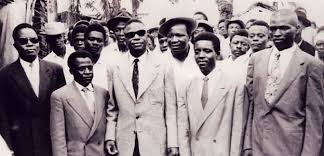
The legendary leadership trinity came into the fold shortly after. Ruben Um Nyobé formally joined the UPC and ascended to the helm as Secretary General later in November 1948. His immense charisma, peerless legal arguments, and labor organizing skills transformed the trade unionist project into a massive popular movement, earning him the title of Mpodol (The Spokesman).
Ernest Ouandié joined later that same year after a punitive teaching transfer brought him to Douala, quickly rising due to his rigid discipline to become Vice-President by 1952.
Félix-Roland Moumié, a brilliant young medical doctor, joined the core bureau around the same time, giving the party an elite intellectual edge on the global stage at the United Nations.
Together, they co-opted the structure built by the twelve trade unionists, turning the UPC into an unstoppable revolutionary force that organized urban dockworkers, plantation laborers, and market women across ethnic lines.
Who Was Roland Pré?
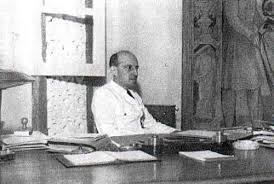
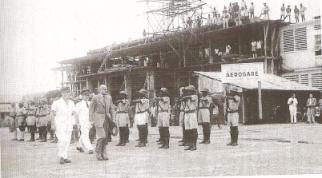
Because the UPC had become an existential threat to French equatorial dominance, Paris decided to drop all diplomatic pretenses. In December 1954, they appointed Roland Pré as the French High Commissioner of Cameroun.
Pré was a cold, technocratic colonial administrator with a singular, ruthless mission: crush the UPC before it could permanently destabilize French interests in Central Africa.
Pré viewed the burgeoning independence movement not as a legitimate political expression, but as a dangerous communist tumor that needed to be surgically excised.
Upon his arrival, he immediately weaponized the colonial state apparatus. He initiated aggressive judicial crackdowns, banned public nationalist assemblies, deployed colonial troops to intimidate rural populations, and heavily pressured traditional chiefs and the Catholic clergy to issue public sermons denouncing the nationalists as godless subversives.
Pré was the architect of state polarization, setting the stage for a violent colonial showdown in May 1955.
Ahidjo’s Position at the Time
Where was Ahmadou Ahidjo during this high-stakes crucible?
In May 1955, the future first president of Cameroon was far from the revolutionary barricades; he was a moderate, pro-French institutional politician operating safely within the colonial system.
Having entered the Cameroon Territorial Assembly (ATCAM) in 1947, Ahidjo had spent the early 1950s building his reputation among French colonial authorities as a reliable, conservative northern leader.
By 1954, he was serving in Paris as a Cameroon counselor to the Assembly of the French Union. At this point in history, Ahidjo viewed the UPC’s radical demands for immediate independence as reckless, premature, and dangerous. He championed a slow, collaborative transition that maintained deep, unbroken ties with France.
In fact, Ahidjo actively aligned with the French strategy to deliberately delay Cameroon's independence. This calculated delay was designed to buy Paris enough time to completely crush, outlaw, and politically liquidate the UPC vanguard.
In other words, while the nationalists fought and bled on the streets for immediate sovereignty, Ahidjo was quietly positioning himself in the corridors of colonial power as the stable, compliant alternative that France could safely hand the keys of the country to once the UPC was eliminated.
The Catalyst, The Uprising
Every spark requires a buildup of heat.
By April 1955, the political climate in French-administered Cameroun was electric. The flashpoint arrived on April 22, 1955, when the UPC bureau published the Proclamation Commune(https://www.calameo.com/books/000510700112401973896).
Signed by the UPC leaders, this radical text called for the immediate termination of the UN trusteeship and a unilateral push for reunification.
High Commissioner Roland Pré chose to interpret the proclamation as a literal act of war. Over the next few weeks, the colonial judiciary issued aggressive arrest warrants, tracking down local organizers and attempting to choke the movement's communication loops. The state was coiled, ready to spring a definitive trap that would criminalize the independence project forever.
"The 22nd of May was not a random riot. It was a confrontation between a people demanding dignity and a system relying on terror." — 237 Rewind Alternate Timeline Records
The Flashpoint: The May 1955 Streets Ignite
The political pressure cooker finally exploded between May 22 and May 25, 1955. Driven to a breaking point by Roland Pré’s aggressive economic blockades and political intimidation, the streets took over.
Simultaneously, across the southern and coastal industrial belts — including Douala, Yaoundé, Nkongsamba, Loum, and Édéa — a massive wave of coordinated anti-colonial demonstrations erupted.
This wasn’t just a series of protests; it was an organized societal shutdown. Labor workers, plantation laborers, and radical youth constructed massive barricades across commercial transit routes, severed colonial telegraph lines to blind administrative communications, and occupied strategic public squares.
Roland Pré responded with immediate, unrestricted military terror. The French colonial administration deployed heavily armed military reinforcements and authorized the use of live ammunition directly against civilian crowds.
In Douala, military trucks swarmed the neighborhoods of Akwa and New-Bell, firing indiscriminately into markets and crowded residential streets.
To break the spine of the movement, French forces targeted the physical infrastructure of the vanguard. They raided and burned the UPC national headquarters to the ground, incinerating decades of labor records, political literature, and legal archives.
The state followed the fires with dragnet sweeps, rounding up thousands of suspected militants into mass detentions without trial. While official colonial records conservatively downplayed the casualties, independent historical investigations reveal that hundreds — and likely thousands — of Cameroonian citizens were slaughtered during that single bloody week.
This brutal crackdown permanently shattered the landscape of Cameroonian nationalism. It proved to the population that the French baseline for dialogue was absolute violence.
But the mass casualties did not kill the independence movement. Instead, they deeply radicalized it. The trauma of the May streets turned an open, public political party into a hardened, clandestine machine. For the leadership and the masses alike, the illusion of a peaceful, constitutional path to sovereignty was dead. Survival now required the shadows.
The Decapitation of the Vanguard
The July 13, 1955 decree outlawing the UPC changed the rules of the struggle instantly. Driven out of legal politics, the vanguard had to choose between absolute submission or total armed resistance.
Under the guidance of Ruben Um Nyobé, they chose to fight.
But the colonial empire, working hand-in-hand with the rising administrative star Ahmadou Ahidjo, deployed an overwhelmingly sophisticated, brutal counter-insurgency machine to systematically eliminate the icons of our independence.
The Falling Dominos: How the Icons Died
Ruben Um Nyobé (September 13, 1958):
Mpodol chose to wage his campaign from the dense forests of Sanaga-Maritime, relying on ideological education and popular mobilization. French military forces, utilizing local trackers and a strategy of complete encirclement, finally tracked him down near his native village of Boumnyébel. He was shot dead while unarmed. In a final act of desecration, the colonial forces dragged his body through the mud.
Félix-Roland Moumié (November 3, 1960)
With the domestic front facing intense military pressure, Moumié took the struggle to the global stage as the president of the exiled UPC bureau. His effective diplomatic campaigns at the United Nations made him a prime target for French intelligence. While in Geneva, Switzerland, he was assassinated by William Bechtel — an undercover French secret agent posing as a journalist. Bechtel slipped lethal thallium poison into Moumié’s aperitif.
Ernest Ouandié (January 15, 1971)
Having secretly returned from exile in 1961 to lead the Armée de Libération Nationale du Cameroun (ALNK), Ouandié managed a guerrilla war in the Mungo and West regions for nearly a decade. Starved of foreign ammunition, physically broken by years on the run, and ultimately betrayed after seeking sanctuary through Bishop Albert Ndongmo, he walked into custody in August 1970. On January 15, 1971, he stood straight before a public firing squad in Bafoussam, refusing a blindfold, and shouting his final testament: "Vive le Cameroun, l'histoire jugera!"
237 Rewind — The Alternate May 1955 - What If?
But what if Roland Pré’s state terror had utterly collapsed before it could write this tragic timeline?
Let’s turn back the clock to May 22, 1955.
In this alternate reality, the UPC executive bureau utilizes a network of highly skilled indigenous telegraph operators — secretly trained by Ernest Ouandié — to intercept Pré’s confidential military troop movement telegrams three days before the scheduled raids.
Instead of localized, uncoordinated urban riots breaking out blindly in Douala or Mbanga, Mpodol coordinates a unified, highly disciplined national general strike.
When the French military vehicles roll into New-Bell and Akwa on May 22, they do not find chaotic crowds. They roll into cities frozen by absolute, organized civilian non-cooperation. The ports are paralyzed. The railways are silent. In the rural West and Littoral regions, farming cooperatives completely block the supply of food, cocoa, and coffee to the European quarters.
Faced with a massive, multi-front civilian blockade, High Commissioner Pré panics and commands his troops to clear the streets by any means necessary. But seeing thousands of market women and schoolchildren sitting peacefully on the train tracks, a critical regiment of indigenous Cameroonian infantry soldiers lowers their rifles, refusing to fire into their own families.
The Fourth French Republic — already reeling from its catastrophic military defeat at Dien Bien Phu and bleeding heavily from the escalating revolution in Algeria — cannot afford a third protracted, bloody colonial war in a United Nations Trust Territory. Roland Pré is recalled to Paris in absolute disgrace.
The July 13 decree to ban the party is never written.
Instead, a senior diplomatic delegation is dispatched directly from France to Douala to sign the Douala Accords of August 1955. The UPC is formally recognized as the legal, majority political voice of the territory.
A joint transitional council is established to oversee an immediate, supervised end to the UN trusteeship. Most importantly, total and unconditional reunification with British Southern Cameroons is cemented as a baseline requirement for formal statehood by 1957.
Because the party remains legal, the Maquis is never born.
The devastating civil war that cost tens of thousands of Cameroonian lives never happens.
Ruben Um Nyobé, Félix Moumié, and Ernest Ouandié and others survive to form the executive core of our first sovereign, multi-ethnic, pan-African coalition — permanently bypassing Ahidjo's rise to power and forging a genuine, decentralized, and equal Federal Republic.
The Ultimate Historical Irony: The Shared Fate of Exile
Returning to our true timeline reveals one of the most stunning, poetic ironies in Cameroonian history. Ahmadou Ahidjo, the man who willingly collaborated with colonial authorities and delayed independence to ensure the physical destruction of the UPC, ultimately suffered the exact same fate as the men he hunted.
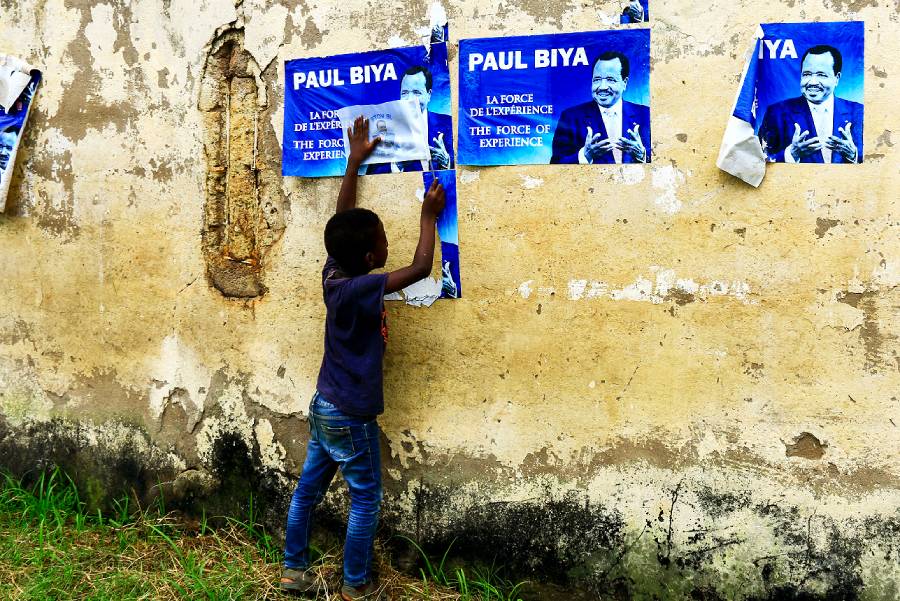
Following his unexpected resignation in 1982 and his subsequent political fallout with his handpicked successor, Paul Biya, Ahidjo was forced to flee the country in 1983. In 1984, the very courts he built convicted him in absentia of high treason and sentenced him to death.
Just like Félix Moumié and Ernest Ouandié, Ahidjo became a stateless fugitive, living out his final years in bitter, isolated exile before dying of a heart attack in Dakar, Senegal, on November 30, 1989.
The historical loop closed completely on December 16, 1991. Following a massive wave of pro-democracy "Ghost Town" (Villes Mortes) protests that shook the country, the Cameroonian Parliament passed a historic legislative act to rehabilitate the figures of our past.
In a twist of absolute irony, the exact same law that rehabilitated the radical UPC martyrs was the very same law that rehabilitated Ahmadou Ahidjo.
"The hunter and the hunted, the collaborator and the revolutionary, were rewritten into the state ledger by the exact same stroke of a pen." — 237 Rewind Reflections
The Timeline of Events
The Three Questions
The timeline is now in your hands. We’ve unmade the borders of 1955, but a different past always creates a different future. Drop your letters with your theories in the comments below and let’s debate these three burning questions:
- The Unity Illusion: Would the UPC Have Split Anyway?
The UPC was a massive, beautiful coalition, but it brought together two wildly different worlds: radical, Marxist-influenced urban trade unionists and highly conservative traditional rulers like King Mathias Djoumessi. If they had won legal power in 1955, would this alliance have actually held? Or would the common enemy (France) vanishing have caused the party to instantly fracture along ideological and regional lines?
- The Iron Fist Paradox: Could a Free Federation Survive?
Let’s get real about stability. Official history claims Ahmadou Ahidjo’s ruthless, iron-fisted centralization was the only thing that stopped Cameroon from collapsing into chaos. Without Ahidjo's police state, could an early, highly decentralized UPC federation have kept the peace? Or would a completely free 1950s Cameroon have imploded into a multi-ethnic civil war like neighboring Nigeria or the Congo?
- Ultimate Justice or Historical Insult: What’s Your Verdict on the 1991 Law?
This is the ultimate kicker of our true history. On December 16, 1991, the state passed a blanket law that rehabilitated fallen heros. That means the exact same pen stroke that declared the revolutionary martyr Ernest Ouandié a National Hero also cleared the name of Ahmadou Ahidjo — the man who hunted him to the firing squad. Is this beautiful, poetic national reconciliation, or is it a deep historical insult to the memory of our martyrs?
This post was published on May 18, 2026 — approximately 71 Mays after the 1955 May Riots. Which timeline would you rather live in? Our reality, or the May 1955 that could have been?