After 11 years of a two-star federation — a delicate arrangement meant to balance the former French Cameroun and the British Southern Cameroons — President Ahmadou Ahidjo posed a singular question to the nation. The wording was precise, almost surgical:
"Do you approve, with the aim of consolidating national unity and accelerating the economic, social and cultural development of the nation, the draft constitution submitted to the Cameroonian people by the President of the Federal Republic of Cameroon and establishing a Republic, united and indivisible, under the name of the United Republic of Cameroon?"
The Results
The Cameroonian people answered with what appeared to be a deafening roar of approval.
Yes: 3,177,846 votes — 99.99%
No: 176 votes — 0.01%
Valid votes: 3,178,022 — 99.95% of total cast
Invalid or blank votes: 1,612 — 0.05% of total cast
Total votes cast: 3,179,634
Registered voters: 3,236,280
Turnout: 98.25%
Only 176 people — fewer than the population of a small village — voted against the dissolution of the federation.
Following this near-unanimity, Decree No. 72-270 was promulgated on June 2, 1972, officially dissolving the Federal State and giving birth to the United Republic of Cameroon. The two stars on the national flag, representing the two federated states, were merged into a single golden star — a visual declaration that the federation was no more.
But What If
On the surface, the math is unforgiving. Even if every single one of the 56,646 registered voters who stayed home had voted "NON," the "OUI" would still have won by a landslide — 3,177,846 to 56,822. The result would have been 98.2% in favor. The outcome was never in doubt.
But what if the question itself had been different?
What if the referendum had been held by region rather than as a single national block, requiring a double majority — a majority of votes nationwide AND a majority in each federated state?
This is not a fantasy. Double majority referendums are common in federal systems like Australia, Switzerland, and Canada. They ensure that larger, more populous regions cannot overwhelm smaller ones on matters of fundamental constitutional structure.
If that had been the case, the Anglophone West (former British Southern Cameroons) would have needed to approve the unitary state separately. And there is every reason to believe they would have voted "No."
The Anglophone West had reasons to fear centralization. They maintained a separate common law legal system, an English-language education system, and a distinct administrative culture. The federation, however imperfect, protected these differences. A unitary state threatened to erase them.
The Hong Kong Precedent
What would a "No" vote have looked like in practice? One model is "One Country, Two Systems" — the framework under which Hong Kong rejoined China in 1997 while retaining its own legal system, currency, and way of life for 50 years.
Imagine a similar arrangement for Cameroon:
- A federal capital in Yaoundé handling defense, foreign affairs, and national currency
- Two autonomous regions — Francophone East and Anglophone West — each with control over education, judiciary, and local governance
- A constitutional guarantee that the Anglophone common law system would remain intact
- A sunset clause or renegotiation mechanism for the arrangement after a set period
Such a structure would not have been unprecedented. The original 1961 federal constitution already contained seeds of this arrangement. It simply needed to be preserved and strengthened, not abolished.
What would be different today?
If the 1972 referendum had failed — or been structured as a double majority — several outcomes become imaginable:
1. No Anglophone Crisis (2016-present)
The most direct consequence. The separatist insurgency that has displaced over 900,000 people and claimed thousands of lives grew directly from the perception that Yaoundé ignored Anglophone grievances for decades. With genuine autonomy, those grievances might have remained provincial political debates, not armed conflict.
2. A different Biya succession
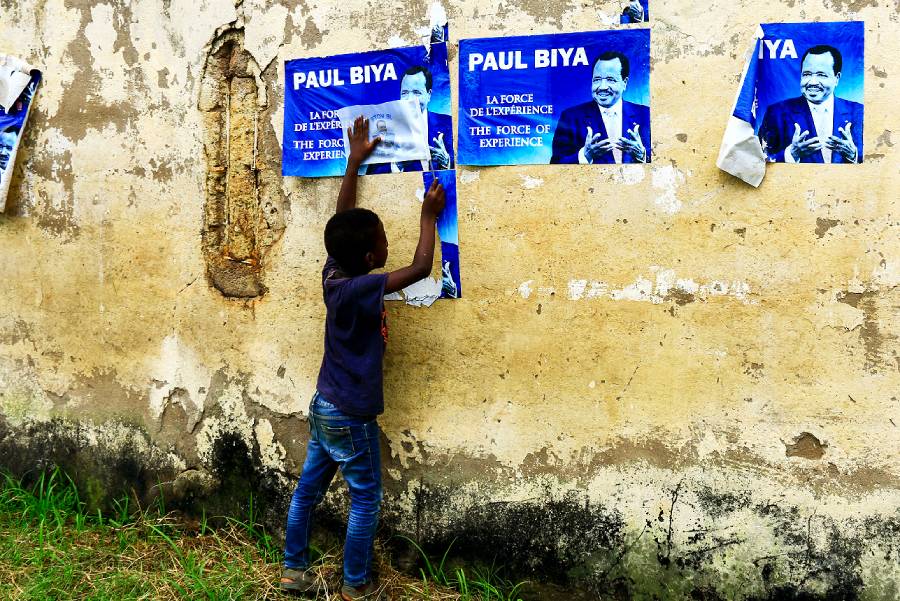
Paul Biya became president in 1982, inheriting the full powers of a unitary state. In a federal system, the presidency might have been weaker, or rotated between regions. The 40-year dominance of a single leader might never have been possible.
3. International standing
Cameroon is often called "Africa in miniature" for its diversity. A successful bilingual, bijural federal state would have been a model for other African nations struggling with ethnic and regional tensions — Nigeria, Sudan, the DRC. Instead, the country became a cautionary tale about centralization.
The counterfactual is not that the federation would have been perfect. It likely would have faced its own crises — disputes over revenue sharing, jurisdictional fights, political deadlock. But those are the normal tensions of democracy, not the slow-burning fuse of alienation and marginalization.
The tragedy of May 20, 1972 is not that the wrong side won. It is that the question was never asked properly — in a way that respected the federal nature of the nation itself.
Three Intriguing Questions
1. The Unanimous Mirage
In the history of global democracy, 99.99% is a statistical impossibility. Only 176 people voted "No." Was this a genuine heartbeat of a young nation hungry for unity, or the first masterclass in "administrative mobilization" that set the tone for all future Cameroonian elections? To put it in perspective: more people have likely been struck by lightning in Cameroon since 1972 than voted against the unitary state.
2. The "Indivisible" Clause
Decree No. 72-270 used the words "One and Indivisible" — language borrowed from the French Republic, which has no room for intermediate sovereignties. By enshrining "indivisibility" into law so early, did the state accidentally close the door on healthy decentralization for the next 50 years? Could a different phrase — "United in Diversity" — have signaled a different future?
3. The Nigerian Exit
History tells us some who disagreed with the new constitution simply crossed the border to join Nigeria. How many teachers, lawyers, doctors, and thinkers did Cameroon lose in June 1972 because they couldn't see themselves in the new "Unitary" mirror? What would those lost generations have built for the Anglophone regions — and for Cameroon as a whole?
Published April 19, 2026 - 19,679 days since Decree No. 72-270 was promulgated on June 2, 1972, officially dissolving the Federal State and giving birth to the United Republic of Cameroon.